The U.S. Virgin Islands experienced its deadliest dengue outbreak in more than a decade, with federal health investigators confirming 263 infections, 15 hospitalizations and one fatality between January 2024 and June 2025.
The victim was a 63-year-old woman with diabetes. Her death marked the territory's first confirmed dengue fatality since 2005, a gap of more than two decades. The Centers for Disease Control and Prevention published the investigation Thursday in its Morbidity and Mortality Weekly Report, conducted jointly with the V.I. Department of Health.
The three islands bore unequal burdens. St. Croix led with 118 cases, or 45 percent of all infections. St. Thomas followed with 105 cases, representing 40 percent, while St. John documented 40 cases, or 15 percent. Patients ranged from two months to 89 years old, with a median age of 44. Women comprised approximately 56 percent of confirmed cases.
Fifteen people required hospital care, staying an average of 4.3 days, with lengths ranging from two to 14 days. The territory's annual dengue incidence reached 2.5 cases per 1,000 residents in 2024.
Early testing delays hampered response
A central weakness uncovered by the investigation was the lack of local dengue testing capacity at the outbreak's start. Samples had to travel off-island for analysis, creating laboratory delays of one to two months.
Not until October 2024 did the Department of Health establish dengue diagnostic testing at the Territorial Public Health Laboratory. Once that service began, results returned in less than one week. The CDC did not disclose how many patients faced the longest delays or whether those delays affected individual hospitalizations or the fatal case.
A separate assessment conducted in August and September 2024 identified a second barrier: healthcare providers lacked recent experience managing dengue and needed training. The Department of Health responded by running 20 clinical training sessions at 30 clinics, covering dengue management, testing and reporting. A telephone hotline launched in October to advise providers, and a web-based disease-reporting system was deployed.
Cases shifted between islands over time
The outbreak did not spread uniformly. From July through September 2024, St. Thomas saw 77 cases and St. John saw 26, while St. Croix recorded only six. The distribution reversed sharply from October through December 2024, when St. Croix jumped to 64 cases against five on St. Thomas and one on St. John.
St. Croix remained the epicenter through early 2025, accounting for all 42 cases recorded between January and March, plus five more between April and June. St. Thomas and St. John reported no additional confirmed cases during the first half of 2025.
Among 105 infections where the virus type was identified, 101 involved dengue virus type 2 and four involved type 3. Three of the four type 3 patients reported recent travel to Puerto Rico. Overall, 256 patients, representing 97 percent of all confirmed cases, reported no travel in the two weeks before symptoms appeared, indicating most infections spread within the territory.
Mosquito control and public education expanded
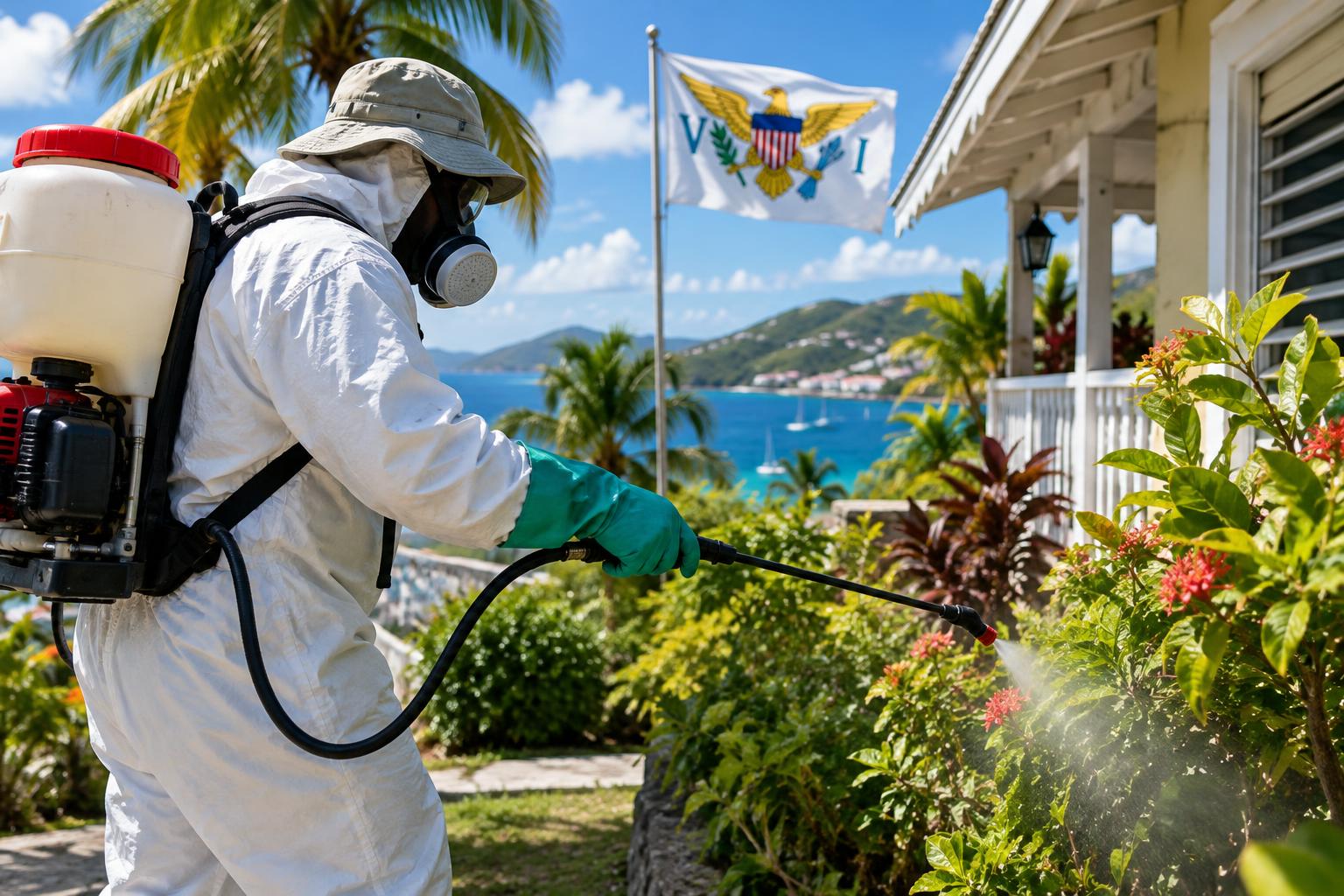
Health authorities deployed multiple strategies to contain transmission. Door-to-door teams visited 25 communities with reported cases, inspecting 256 residential yards for breeding sites of the Aedes aegypti mosquito and applying larvicide at 167 homes.
Approximately 900 spatial-repellent devices, which release small amounts of insecticide without requiring electricity or heat, were distributed. Mosquito nets for cribs went to seven childcare, orphanage and maternal healthcare facilities.
Public outreach reached 420 households and 54 schools, plus activities at 10 public events and four press conferences. Federal and territorial officials concluded the response had successfully established local testing, expanded clinical training and strengthened mosquito control and education. The CDC stressed maintaining those capabilities between outbreaks to enable rapid response to future dengue surges.



Comments
No comments yet. Be the first.