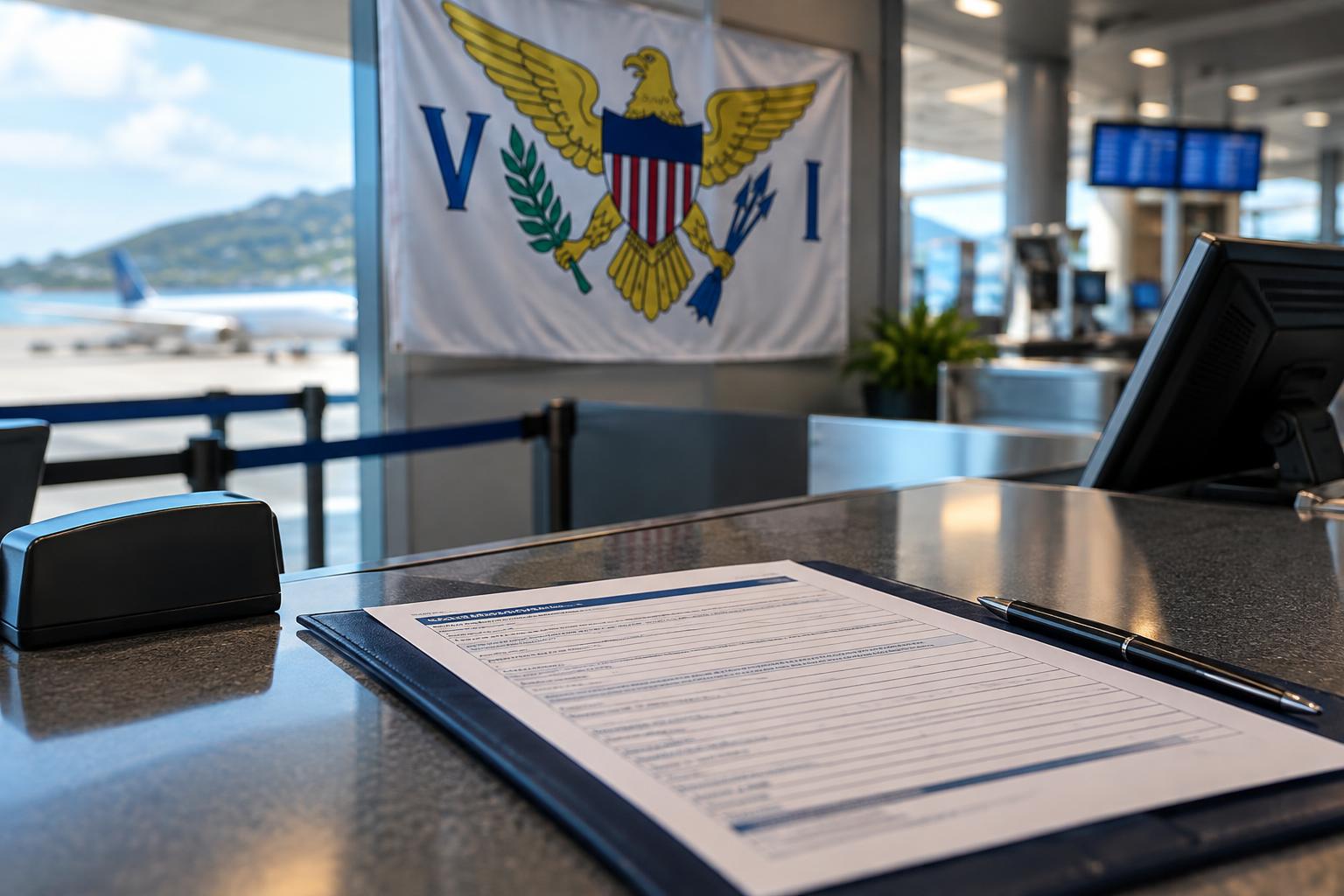
Starting late Tuesday night, anyone boarding a flight to the U.S. Virgin Islands from a foreign country must complete and sign a statement saying they have not travelled to the Democratic Republic of the Congo in the past 21 days.
The Centers for Disease Control and Prevention issued the order, which takes effect at 11:59 p.m. Eastern Standard Time on November 3 (12:59 a.m. Wednesday in the islands). The rule applies to U.S. citizens, foreign nationals, lawful permanent residents, airline staff and passengers on private or cargo flights arriving from overseas. Flyers coming from Puerto Rico or the mainland United States are exempt, since those are not foreign countries under federal law.
For the territory, this means travellers on direct flights from Caribbean nations like the British Virgin Islands will need to complete the form. Ferry passengers between the BVI and USVI do not fall under this requirement.
Airlines must gather the declarations before passengers board, either digitally or in paper form, and keep copies for at least 42 days. Parents or guardians can sign on behalf of children under 18 or people unable to sign themselves. Anyone who refuses or cannot provide the declaration will be barred from flying unless they hold a federal exemption. Submitting false information carries criminal penalties.
The order, published in the Federal Register on October 30, remains in place through December 18 unless federal officials change or cancel it sooner.
People who actually spent time in the Democratic Republic of the Congo within the past 21 days face tougher rules. They cannot board flights to U.S. destinations until 21 days have passed since they left the country. This applies even to those who only passed through an airport there without exiting the aircraft.
The CDC introduced the measure to reduce the risk that people exposed to Ebola could enter the United States before symptoms appear. The virus causes severe illness including fever, vomiting, diarrhoea and sometimes bleeding, and can spread through direct contact with infected bodily fluids. Symptoms can develop between two and 21 days after exposure. The agency said the "overall risk to the American public and travellers remains low."



Comments
No comments yet. Be the first.