ST. CROIX. Federal agriculture authorities have given the go-ahead for an emergency programme to eliminate Mediterranean fruit flies from St. Croix, marking the territory's first encounter with a federal Medfly quarantine.
The U.S. Department of Agriculture's Animal and Plant Health Inspection Service finished an environmental assessment in September and signed off on the plan on September 24. The quarantine zone spans roughly 84 square miles, most of St. Croix, minus its outer islands and cays.
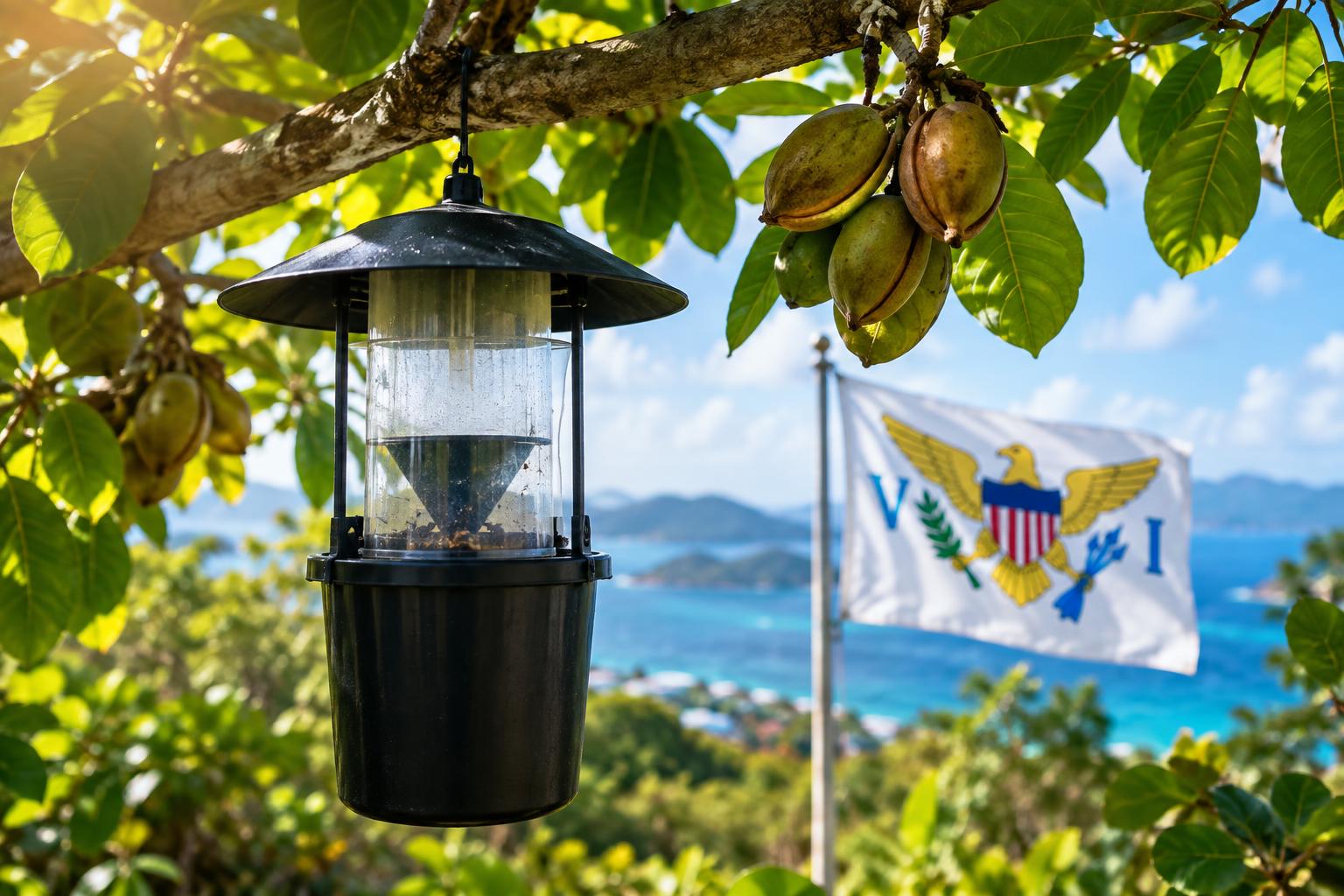
The infestation began in January 2026 when two male Medflies turned up separately on the island. Four more specimens surfaced on August 17 and September 2, three mature males and one unmated female, captured in traps set in tropical almond trees at homes in Christiansted. Those August and September discoveries showed active breeding activity, prompting federal involvement.
The eradication approach uses multiple tactics working together. When officials spot signs of breeding on a property, they may spray targeted areas within at least 200 metres of the find using ground equipment. Workers would apply GF-120 NF Naturalyte Fruit Fly Bait, which blends the insecticide spinosad with food attractant to lure the insects. Spraying could happen every one to two weeks for roughly one Medfly life cycle, typically 21 to 30 days in local conditions.
Fruit removal is also part of the plan. If a property shows evidence of breeding, fruit would be stripped, placed in heavy plastic bags and taken to a landfill for burial under at least one foot of soil.
Monitoring will intensify sharply near detection sites. Traps within a half-mile of a confirmed fly may be checked daily for seven days, then moved to frequent checks before switching to weekly service.
The most striking element is the possible use of the sterile insect technique. Under this approach, hundreds of thousands of sterile male Medflies would be released into affected zones each week. Sterile males mate with wild females but produce no offspring. If deployed, the USDA would aim to release at least 250,000 sterile males per square mile weekly, sourced from a USDA facility in Puerto Rico.
The quarantine also controls produce movement. Fresh fruit and vegetables, whether commercial or homegrown, cannot leave St. Croix without inspection, treatment and sign-off by Medfly programme staff. The V.I. Department of Agriculture declared a phytosanitary emergency and islandwide quarantine on September 25, ordering residents to keep fresh produce, vegetables and host plants on the island.




Comments
No comments yet. Be the first.