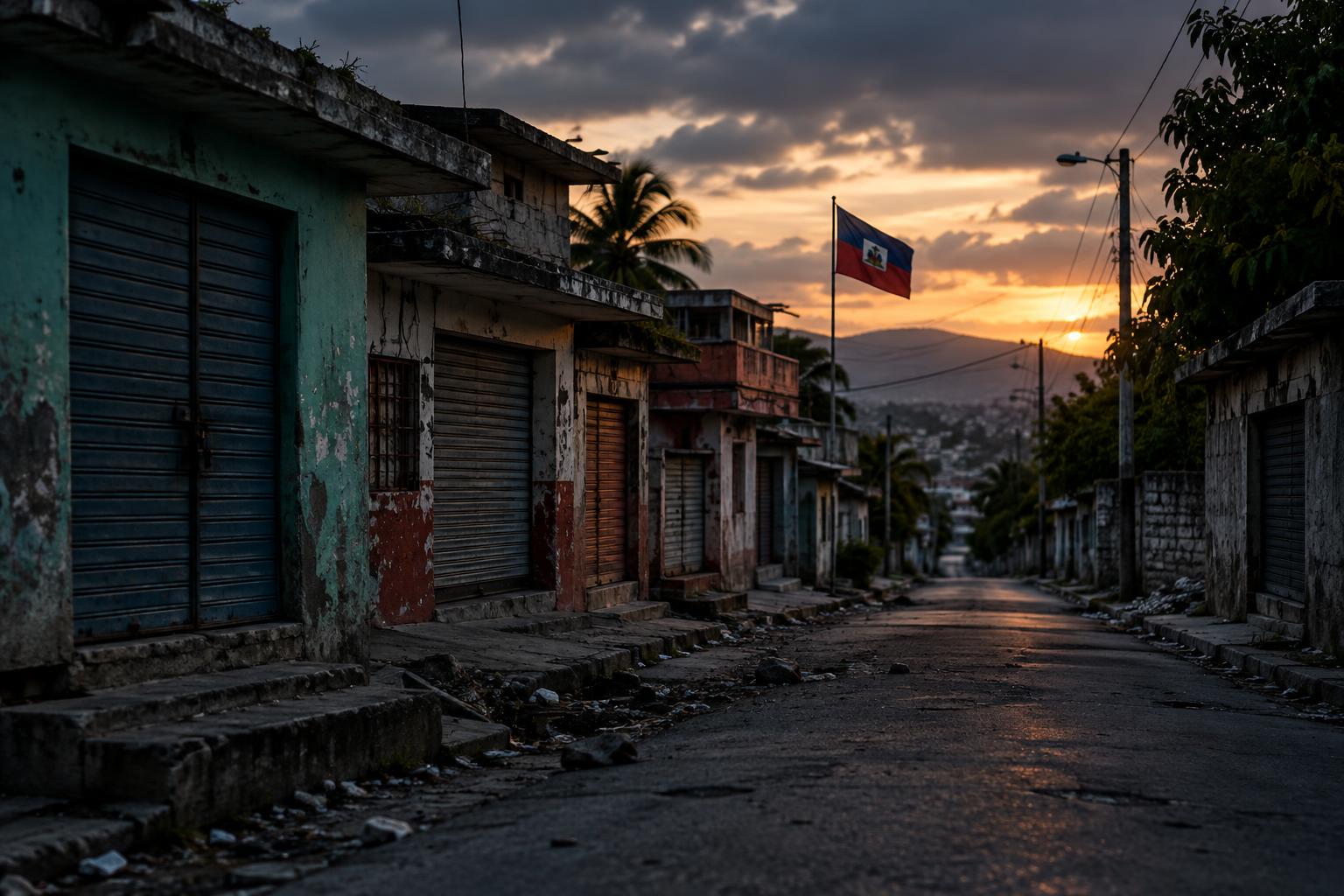
Haiti's government has indefinitely postponed presidential and legislative elections that were originally scheduled for December 13, the United Nations Security Council learned on Monday.
The decision reflects deepening insecurity across the country. Armed groups have responded to intensified security operations by escalating violence against civilians and pushing into rural regions, according to a briefing to the Council.
Carlos Ruiz Massieu, the UN's top official in Haiti, warned against rushing to set new election dates. "Setting new dates for elections without a realistic assessment of their feasibility will only erode public confidence and the credibility of Haitian institutions," he said.
Haiti has not held national elections since 2016. More than 35 political parties and groups and 3,500 candidates have registered for the postponed vote, but voter registration remains far behind. As of October 5, only 759,257 potential voters were on the electoral lists out of an estimated 6.5 million eligible Haitians.
The violence toll
Between July and early October, gang-related violence killed 1,123 people and injured 440 others. Sexual violence has reached alarming levels, with 689 women and girls raped by gang members in July and August alone.
Security force operations have also contributed significantly to casualties. Since early July, such operations have accounted for 52 per cent of those killed or wounded, totalling 808 people. Of these, 148 were not associated with gangs.
Armed groups are using hostage-taking, intimidation and reprisals to consolidate control and challenge government authority. On August 23 and 24, gangs attacked Kenscoff, a mountainous town southeast of Port-au-Prince, killing at least 47 people, wounding 22 and taking 52 hostage. Local initiatives supported by the UN later secured the release of 13 captives. In the West and Artibonite departments, 241 people were killed for allegedly resisting gang demands.
Violence has now reached rural communities including Saint-Michel-de-l'Atalaye, Marigot and Léogâne, where armed groups have targeted farmland, homes and public infrastructure.
Displacement and humanitarian crisis
Nearly 1.5 million people have fled their homes, including more than 740,000 children. The economy is expected to contract for the seventh consecutive year.
Over 1,600 schools are closed, and 95 are sheltering displaced families, according to UNICEF. Armed groups recruited an estimated 200 per cent more children last year. In September, UN partners helped nearly 3,000 children access alternative learning and distributed school supplies to over 4,600. The education response under the Humanitarian Response Plan has received only 30 per cent of the US$61.7 million required.
Security response remains insufficient
The authorised Gang Suppression Force (GSF) continues deployment but falls far short of full strength. As of October 12, it had 1,563 uniformed members compared to the 5,550 authorised by the Security Council.
On Sunday, an armoured vehicle carrying Salvadoran soldiers from the force came under attack in Croix-des-Bouquets, in the Port-au-Prince metropolitan area. Four soldiers were reported missing on Monday.
Massieu told the Security Council that military operations alone cannot restore stability. "Experience has shown that security operations alone cannot bring about lasting stabilisation," he said, calling for permanent restoration of state presence and development of disarmament and reintegration programmes, particularly for children recruited by gangs.
The Haitian government has decided to substantially increase funding to national security institutions and strengthen the capacities of the Haitian National Police and Armed Forces.

Comments
No comments yet. Be the first.