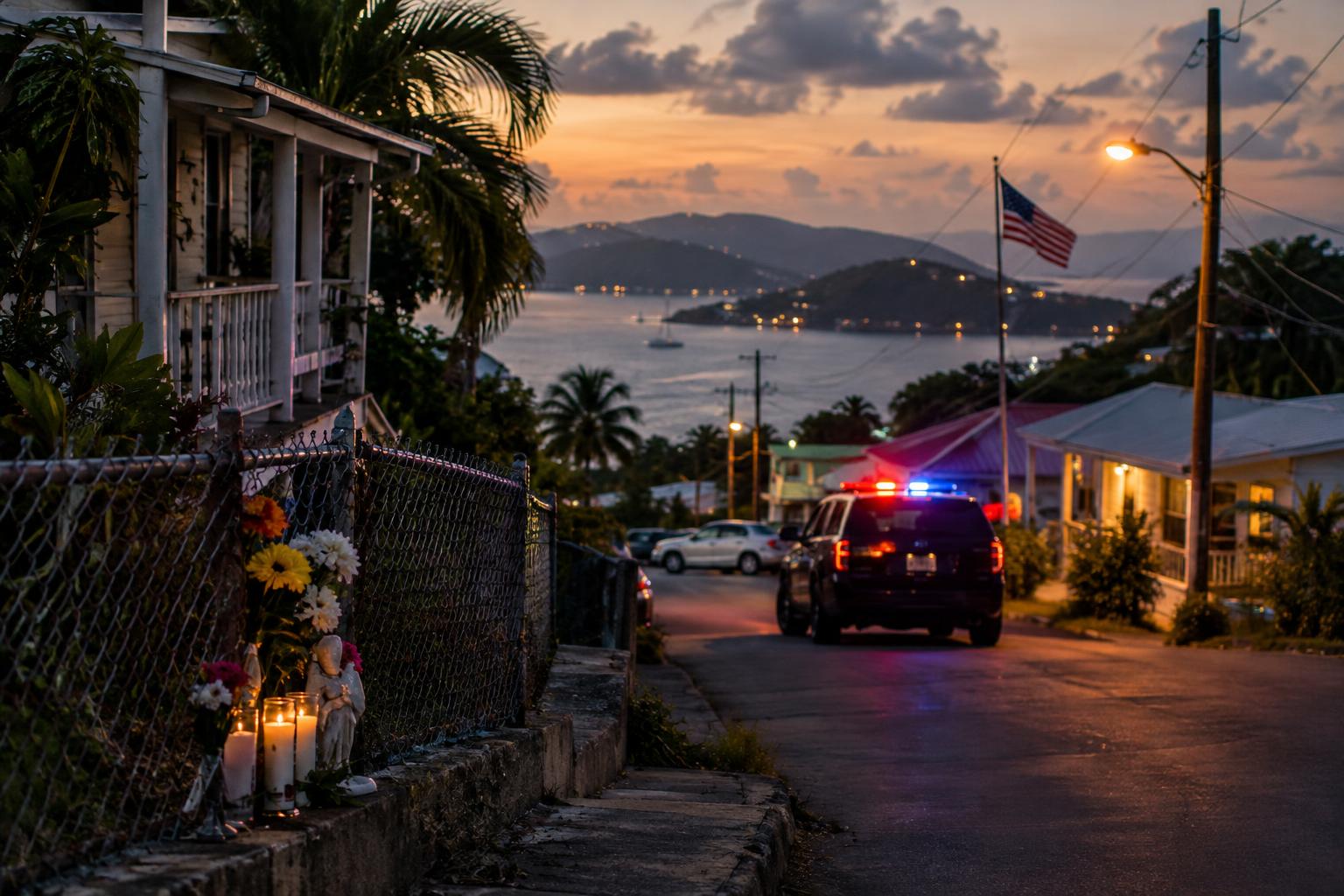
A 17-year-old boy, Ky'jahnny Niles, has been killed on St. Croix, adding to a homicide toll that has remained stubbornly high across two gubernatorial administrations spanning twelve years.
The United Nations Office on Drugs and Crime ranked the U.S. Virgin Islands fourth in the world for homicides per capita, trailing only El Salvador, Honduras, and Venezuela. That ranking was published during former Governor Kenneth E. Mapp's tenure, when the territory recorded 51 official homicides in 2017 alone.
Governor Albert A. Bryan Jr. took office nearly eight years ago promising transformation and modern policing infrastructure. Despite millions spent on surveillance systems, automated license-plate readers, and ShotSpotter audio sensors deployed across St. Croix, the lethal violence has continued unabated.
On the night Niles was killed, a ShotSpotter sensor detected gunfire at 9:07 p.m. in the Walter I.M. Hodge Housing Community and alerted the 911 call center. The technology recorded the caliber and coordinates but could not stop the shooting.
The police department's leadership has faced its own crisis. Ray Martinez, the police commissioner, became entangled in a federal public corruption and wire fraud probe tied to government surveillance contracts and surrendered his department-issued phone to federal agents.
Former police chief Trevor Velinor, recruited from the Bureau of Alcohol, Tobacco, Firearms and Explosives, was pushed out after critics claimed he had not stemmed violence overnight, despite his work on federal-local task forces targeting maritime gun-smuggling and gang rivalries.
Neither the Mapp nor Bryan administrations has dismantled the structural pipeline feeding teenagers into violence, cracked down decisively on the maritime weapons pipeline supplying illegal firearms through unpatrolled shorelines, or established a criminal justice deterrent strong enough to deter shootings, according to analysis of the two tenures.
Case clearance rates remain low, and nearly half of regional crimes go unreported to police because community trust in investigative follow-through has eroded. The territory's violent crime rate, when adjusted to the United Nations standard of per 100,000 inhabitants, remains higher than almost anywhere on American soil.



Comments
No comments yet. Be the first.