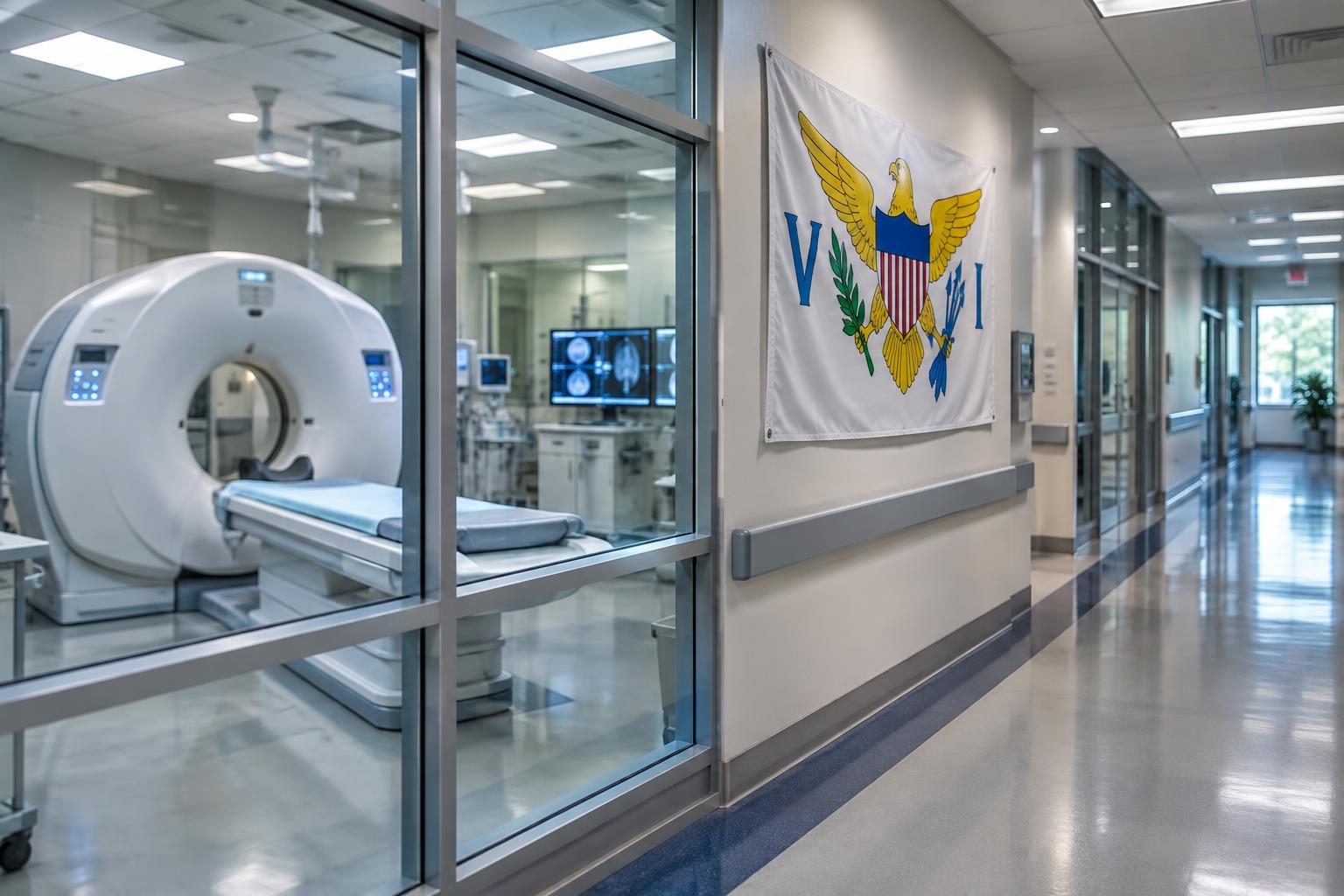
Funding applications submitted to Congress by the Virgin Islands' two public hospitals have laid bare significant shortages in medical imaging capacity, forcing cancer patients to leave the islands for treatment and delaying diagnoses across the territory.
Juan F. Luis Hospital on St. Croix, which serves as the island's sole acute-care facility, operates without an MRI scanner. Patients admitted to the hospital who need magnetic resonance imaging must be sent to a private facility elsewhere on the island, a transfer that extends diagnostic timelines, raises expenses and creates complications for emergency cases and those already hospitalised, according to the hospital's application to Congress.
JFL is seeking $3 million to install a 3.0 Tesla MRI system capable of imaging the brain and nervous system, tumours, heart and blood vessels, and joint and bone injuries.
The challenge facing cancer patients is even more acute. No PET/CT scanner exists anywhere in the territory. This imaging technology, which merges positron emission tomography with computed tomography scanning, allows physicians to identify cancer cells, assess disease progression, shape treatment plans and track whether tumours have returned. Patients needing this examination must travel to Puerto Rico or the mainland United States, incurring delays in diagnosis and care planning alongside substantial financial strain and personal hardship for families.
Schneider Regional Medical Center on St. Thomas has requested $2 million to bring a PET/CT scanner to the Charlotte Kimelman Cancer Institute, which would create the first such imaging service available locally.
Schneider has also submitted a $1.05 million request for emergency and laboratory equipment, including 16 defibrillators, three blood analysers, 15 patient transport stretchers, 30 stretcher mattresses and remote consultation technology. The hospital says these additions would bolster emergency care, speed up bedside testing and expand access to specialists at a distance. A fourth request for $950,000 aims to modernise laboratory systems and broaden testing in microbiology, pathology, blood banking and routine diagnostics, reducing the number of samples sent off-island and accelerating results for urgent cases.
Together, the four projects requested $7 million in federal support. In June, then-Delegate Stacey Plaskett announced that House appropriations proposals included only $2.75 million: $750,000 for JFL's MRI initiative, against the original $3 million ask, and $2 million combined for Schneider's three proposals, which had sought $4 million total. The $4.25 million gap remains unaddressed in the funding announcements, with no indication of how the hospitals plan to finance the difference, whether work could advance in stages, or when services might become available to patients locally.
Congressional approval of spending measures is still required before any money becomes available.
Comments
No comments yet. Be the first.