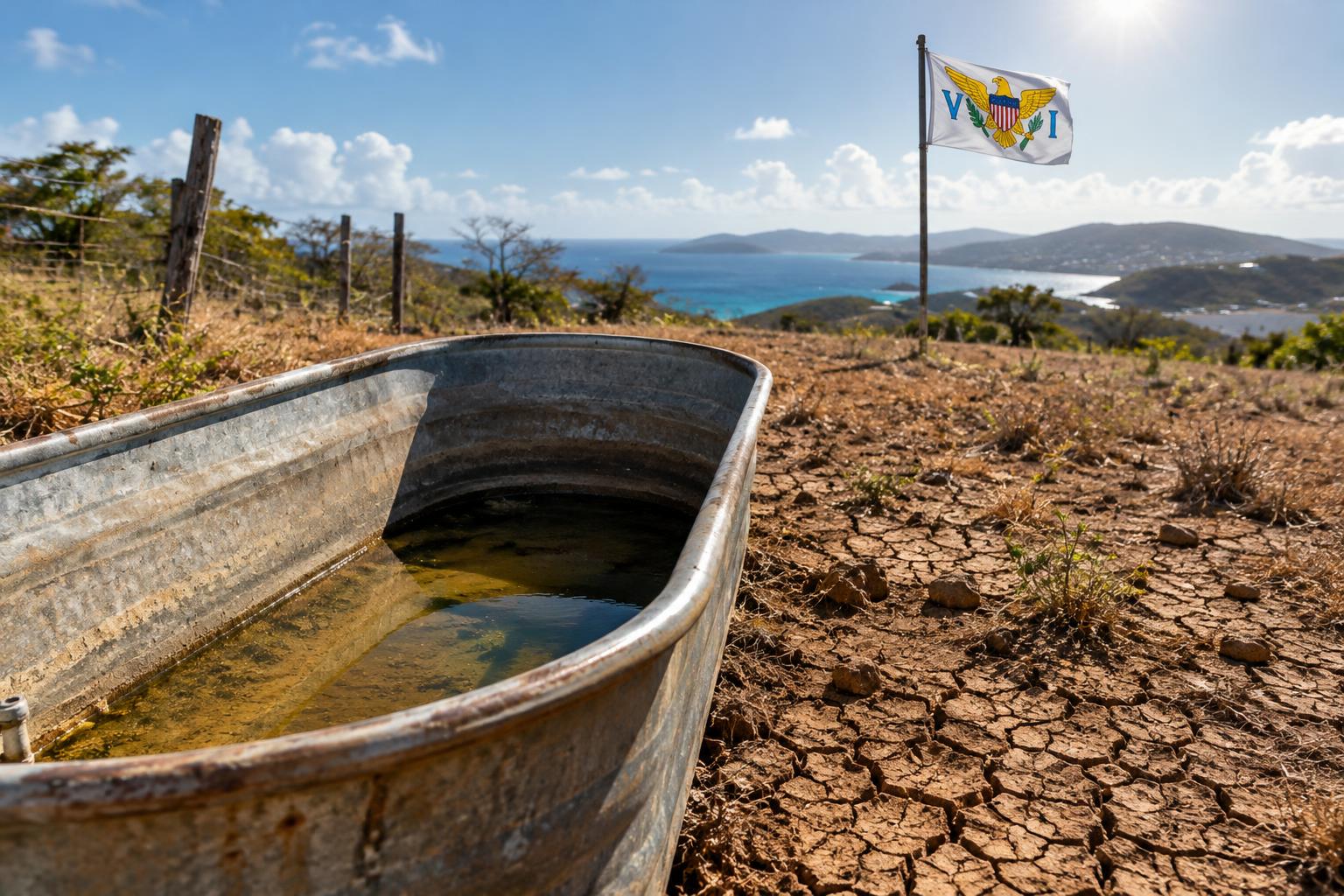
Livestock farmers in the US Virgin Islands who sold breeding or dairy animals because of drought now have extended time to purchase replacements without facing immediate taxes on the gains, following a federal tax notice released this month.
The Internal Revenue Service added all three islands to Notice 2026-54, issued September 15 and published October 13. The determination applies to regions that experienced severe, extreme or exceptional drought in the 12 months ending August 31, 2026. The territory had been excluded from the 2025 list, though it qualified in 2024.
Farmers whose four-year replacement windows would normally close in 2026 can now push those deadlines forward while deferring taxes on the sale gains, provided they meet specific conditions.
Tax Deferral Requirements
The provision covers farmers who sold breeding, dairy or draft livestock in numbers beyond what they would typically sell during normal operations. Animals raised for slaughter, sporting purposes or poultry do not qualify.
Normally, farmers have two years to replace livestock. When a region qualifies for federal drought assistance, that extends to four years. The new notice pushes the deadline further: until the end of the first taxable year after the region experiences a drought-free year.
The IRS defines a drought-free year by examining the 12-month period ending August 31. Even one week of severe, extreme or exceptional drought during that period means the year does not qualify as drought-free.
Farmers must document why they sold, what animals they sold, their normal sales patterns and what they purchased to replace the livestock. The deferral postpones recognizing gains but does not eliminate taxes; the final amount owed depends partly on replacement animal costs.
Worsening Conditions Across the Territory
The tax relief arrives as agricultural conditions have sharply deteriorated. As of October 8, St. Thomas faced Exceptional Drought, the highest severity level, while St. Croix and St. John remained under Extreme Drought.
Producers have reported dead livestock, empty ponds, poor grazing land and mounting costs for feed and water. On St. Thomas, some farmers have cut herd sizes and separated males from females to stretch limited resources. The Department of Agriculture has stopped providing hay-baling services in the St. Thomas-St. John area due to equipment problems.
St. Croix farmers have lost sheep, goats and cattle. St. John farmers face livestock deaths, dried ponds and deteriorating crop conditions. Water deliveries of 5,000 gallons have cost around $450, while hay ranges from $30 to $35 per bale. Federal forecasts predicted drought would continue through the end of 2026.
Separate Federal Loan Program Available
The IRS provision differs from agricultural disaster assistance approved earlier this year. On August 20, the US Department of Agriculture designated all three islands as drought-disaster areas, enabling farmers to apply for emergency loans through the Farm Service Agency.
Those loans can cover livestock replacement, equipment and certain debt obligations. Applications close April 23, 2027.
Unlike the USDA loans, the IRS notice does not provide funds. It simply grants eligible farmers more time to buy replacement animals without immediately owing taxes on sale proceeds.

Comments
No comments yet. Be the first.