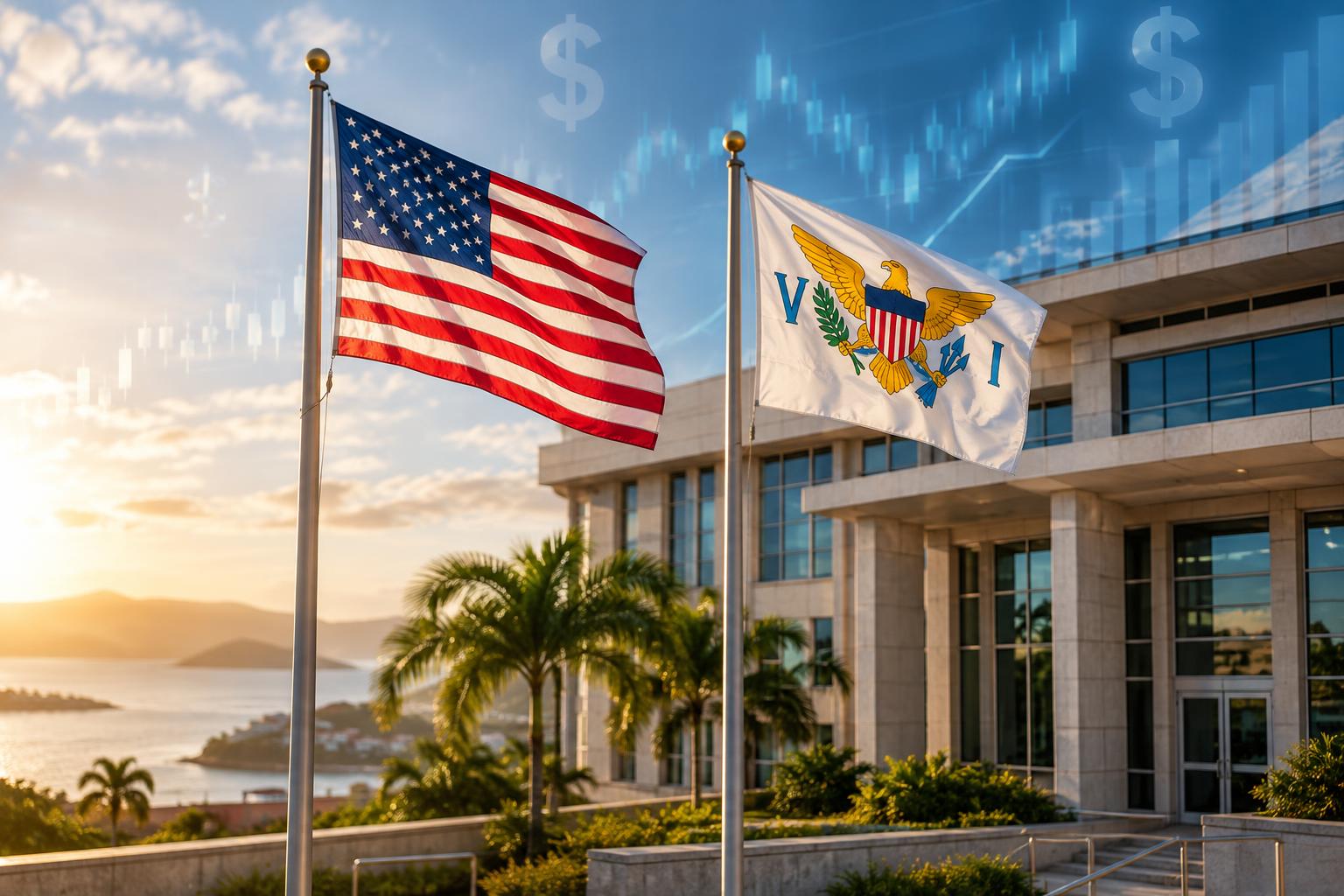
The US Virgin Islands received approximately $1.54 billion in federal commitments during fiscal year 2026, spanning disaster recovery, retirement benefits, healthcare and other programmes, according to Treasury Department spending data.
The sum breaks into several categories: roughly $926 million arrived as grants, $560.7 million as direct payments to individuals, $50.2 million through contracts, $1.4 million in federal loan costs and $882,276 in other aid. Grants made up about 60 percent of the total, with direct payments contributing a further 36 percent.
The Department of Homeland Security led all federal agencies with $509.1 million, or one-third of the total. The Social Security Administration came second at $442.49 million, nearly 29 percent. The Department of Health and Human Services, Department of Agriculture and Department of Housing and Urban Development rounded out the five largest contributors.
Disaster recovery dominated spending patterns. A Federal Emergency Management Agency programme for recovery work after presidentially declared disasters accounted for $475.04 million. Social Security retirement insurance added $387.55 million, while Medicaid grants contributed $163.83 million.
The Government of the Virgin Islands emerged as the single largest recipient at $494.93 million. The V.I. Department of Health received $198.14 million, with the Department of Human Services at $85.70 million and the Executive Office at $54.74 million following behind.
By island, the Treasury assigned $855.9 million to St. Thomas, $281.69 million to St. Croix and $23.58 million to St. John. These figures reflect where work was performed rather than where funds ultimately ended up.
The 2026 total marks a sharp drop from roughly $10.7 billion in fiscal 2025. That earlier year saw unusually large disaster commitments, with approximately $9.7 billion tied to FEMA disaster public assistance. Federal agencies can record obligations for multi-year projects when approving funding, meaning work continues across years without equivalent new commitments annually.
The territory's Office of Disaster Recovery reported $24.55 billion in cumulative disaster obligations as of August 31, 2026, though only $4.89 billion had been spent. Territorial officials said in September they were working with the White House Office of Management and Budget and FEMA to speed up reconstruction and construction timelines.
Federal obligations represent commitments to spend money, not funds already in government accounts or spent on completed work.

Comments
No comments yet. Be the first.