Governor Albert Bryan Jr of the United States Virgin Islands is expected in the British Virgin Islands today to address a long-running dispute over commercial charter vessel licensing fees that has fractured relations between the two territories and drawn attention from multiple US federal agencies.
The row centres on the BVI's decision to revise its Commercial Recreational Vessel Licence framework for the first time since 1992. Under the new structure announced in April 2025, foreign-based charter operators now face annual charges of $7,500 for up to seven entries into BVI waters, $2,100 for each additional entry, $24,000 for unlimited access, $8,500 for day-trip operations, and $2,500 for water-taxi services. Day-trip operators previously paid $200 per year.
The BVI Government contends that commercial operators using its waters should contribute to the services and infrastructure supporting marine tourism. Officials say the fees apply to all foreign-based commercial vessels, not just those from the USVI, and that local operators have also faced increases.
Governor Bryan has argued that the cumulative weight of the new charges, combined with entry restrictions, documentation rules and clearance procedures, threatens USVI maritime businesses and could deter visitors from travelling between the islands.
From negotiation to escalation
The conflict became public in February 2025 when Governor Bryan objected to the proposed increases. He suggested possible retaliatory tariffs and travel charges against the BVI and mentioned the possibility of seeking help from then-US President Donald Trump.
After formal talks on Tortola on March 7, 2025, and further discussions in St Thomas on April 15, 2025, both governments announced a revised fee structure and created a joint Marine Task Force to review charter policy and regulatory matters. They also pledged to streamline vessel clearance and explore technology to reduce delays.
The agreement appeared to resolve the matter. It did not. By September 2026, Governor Bryan revived his complaints. On September 17, he met with officials from the US Departments of the Interior, State, Homeland Security and Commerce, as well as representatives from the Office of the US Trade Representative and the Small Business Administration, at the Interior Department in Washington.
Shortly after, Bryan called for an urgent meeting of the Inter-Virgin Islands Council in Washington during the week of October 12, asking the BVI for written confirmation by September 25. He framed the issue as affecting American businesses and vessels in international waters, and warned that unresolved matters could fall within the jurisdiction of federal agencies overseeing maritime safety, customs, immigration, border security, transportation and trade.
Premier's pushback
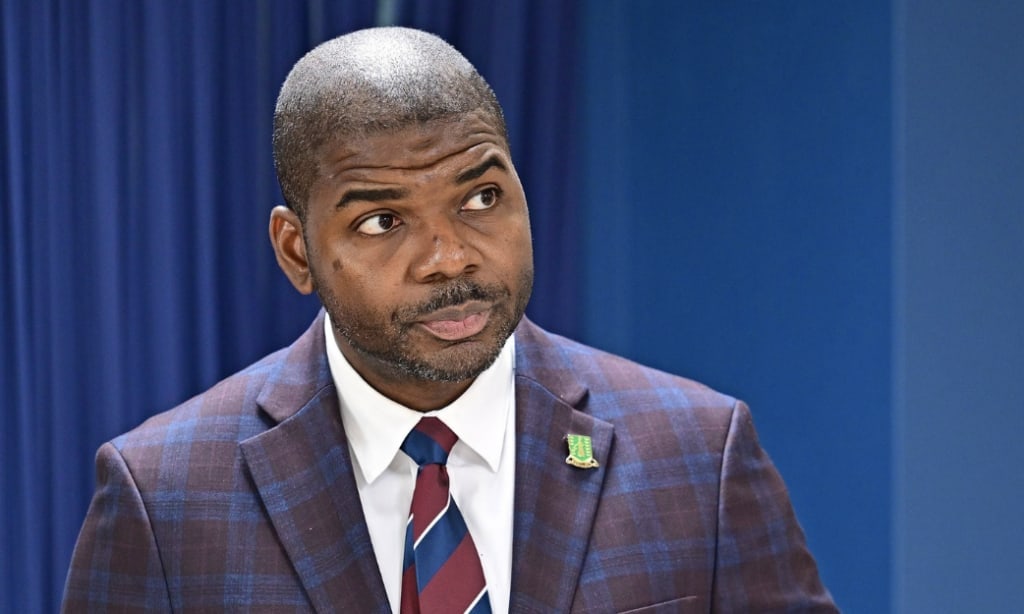
Premier Dr Natalio Wheatley rejected the idea of involving Washington. He said the two territories already had a mechanism for settling disputes through the Inter-Virgin Islands Council and cautioned that bringing in US federal authorities would alter the nature of the talks.
Wheatley noted that if the United States became formally involved, the United Kingdom would need to participate as well, since the BVI is a British Overseas Territory. He stressed that the BVI had negotiated in good faith, made compromises and reached agreement in April 2025, and remained open to meeting Governor Bryan in Tortola to address lingering concerns. However, he objected to what he saw as pressure tactics and artificial deadlines.
The Premier reaffirmed that regulating commercial activity in BVI waters is a power held by the locally elected Government. He defended the revised fees as essential to ensure commercial operators share the cost of maintaining the Territory's marine tourism infrastructure and public services, and said the BVI should not be forced to renegotiate an agreement simply because one party remained unhappy with it.
Comments
No comments yet. Be the first.