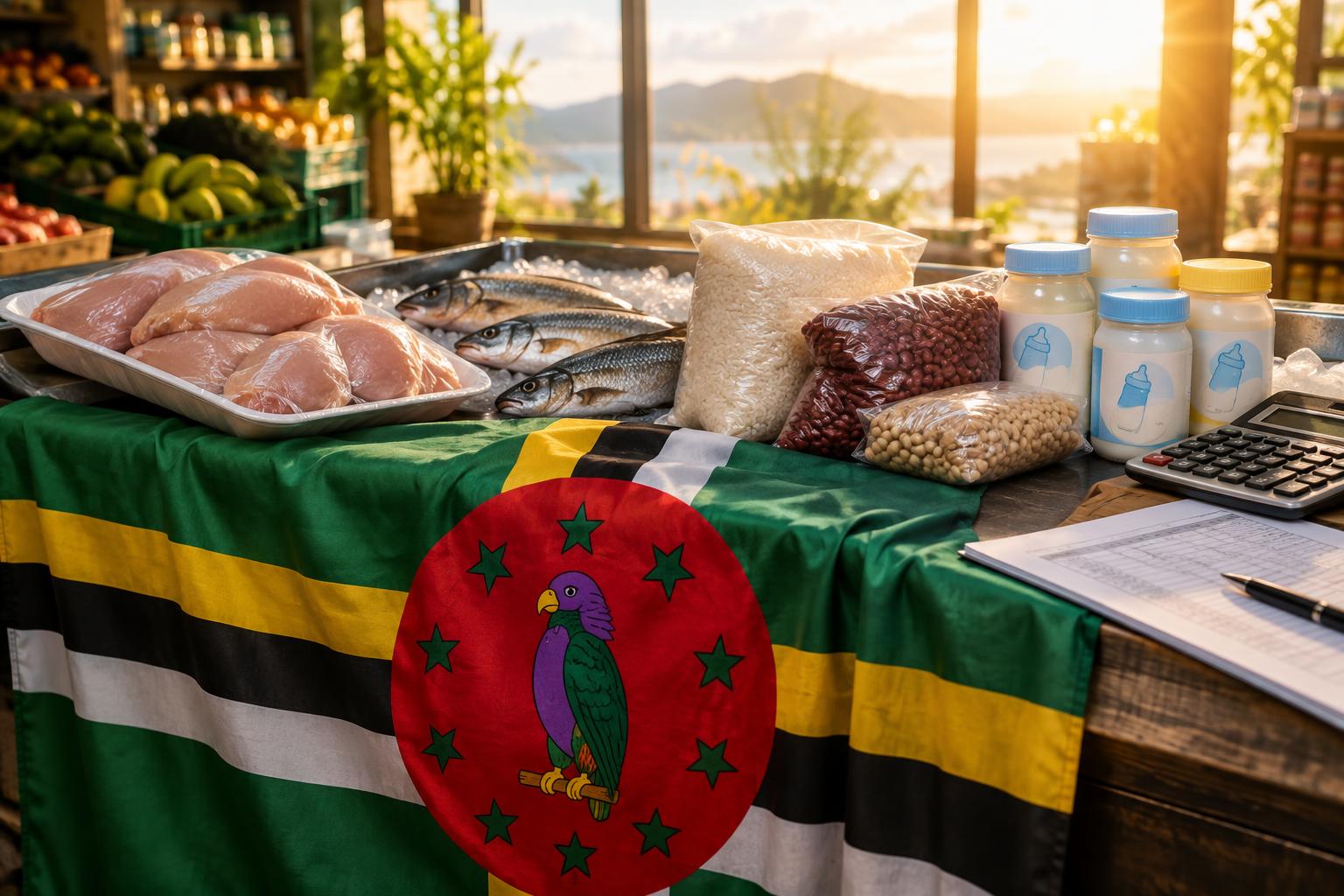
Dominica has adopted its biggest national budget on record, totalling EC$1.213 billion for the 2025, 2026 fiscal year, with a focus on relieving households squeezed by inflation in food and housing.
Finance Minister Dr. Irving McIntyre presented the plan on Friday, centring on tax relief for staple items and targeted support for lower-income households and at-risk populations. The centrepiece removes both import duties and VAT from a range of proteins and grains: chicken backs and necks, chicken wings, cod fish, herring, salted mackerel, rice, oats, cooking oil, beans, lentils, split peas, canned sardines, canned mackerel, canned tuna, garlic, onions, flour, pasta, cereals, apple juice, and infant formula.
Dr. McIntyre explained the rationale: "This policy is designed to ease the burden on households by reducing the cost of basic goods that form part of the daily diet of our people."
For the next six months, the government will broaden exemptions to include canned meats, cream of wheat, cornmeal, wheat bran, unsweetened biscuits, orange juice, tomato ketchup, toothpaste, laundry detergent, toilet paper, and sanitary napkins. Starting October 1, 2025, pigeon peas, luncheon meat, canned corned beef, almond milk, and soy milk will lose their import tariffs.
Beyond tax cuts, the budget allocates rebates of 40, 50% to farmers producing poultry, citrus, and hydroponic crops, aiming to boost domestic food supply and cut reliance on costly imports. The government is also continuing its resilient housing scheme, financed through the Citizenship by Investment programme, and widening housing options for vulnerable groups and young families.
Dr. McIntyre urged residents to take their own steps to trim household spending. He highlighted backyard gardening as a way to grow fresh vegetables and herbs, lower food costs, and eat better. He also recommended buying locally grown produce, which tends to be cheaper and fresher than imports. "We must foster a culture of financial mindfulness, resourcefulness, and community cooperation," he told legislators. "It is this collective effort that will make our society stronger and better equipped to withstand global economic pressures."
The Ministry of Finance, Economic Development, Climate Resilience & Social Security receives the largest share at EC$292 million, representing 43% of the recurrent budget. The Ministry of Health, Wellness & Social Services gets EC$72.8 million (10.7%), and the Ministry of Education, Human Resource Planning & Vocational Training receives EC$71.3 million (10.5%).




Comments
No comments yet. Be the first.