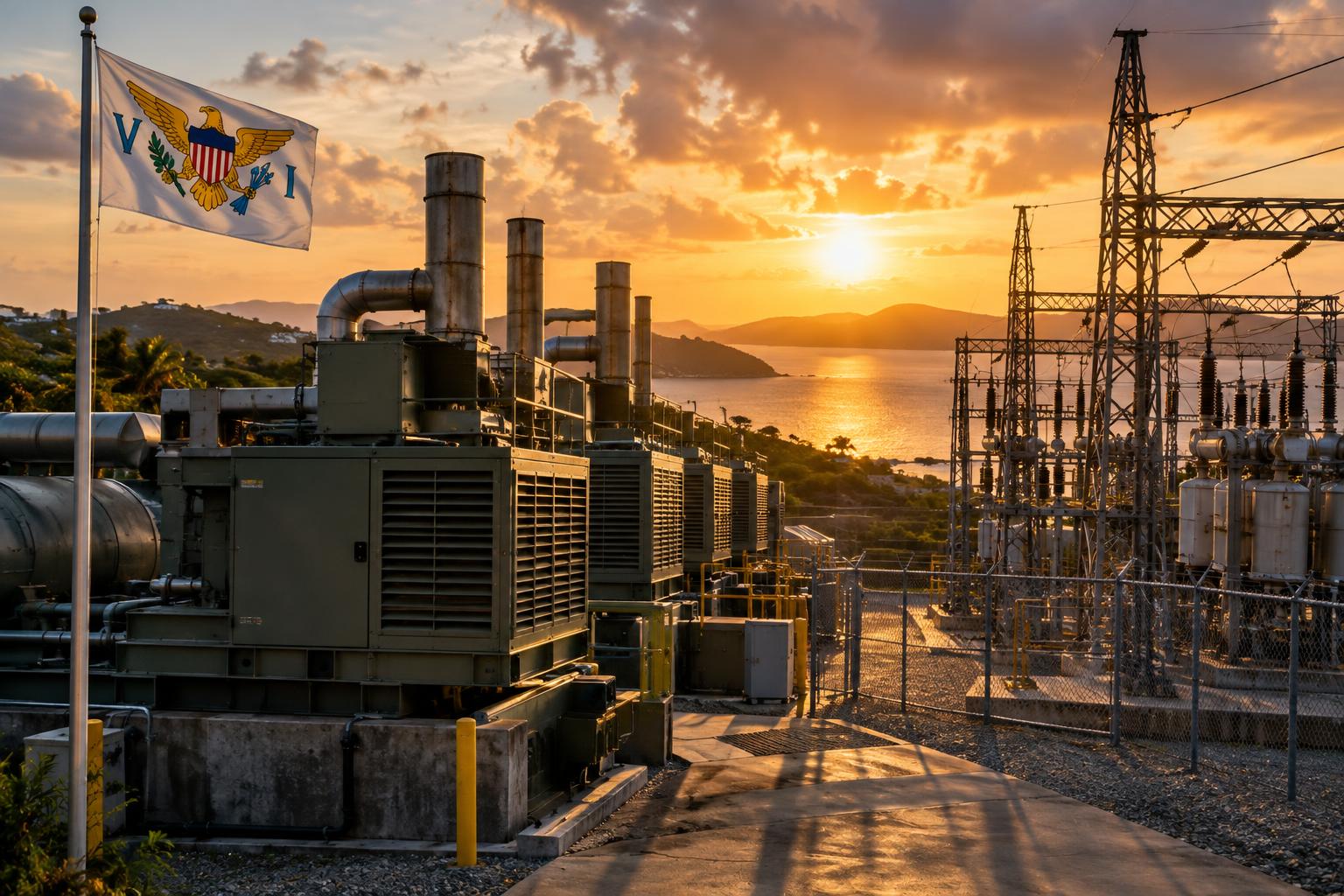
Governor Albert Bryan Jr. has instructed the Department of Human Services to seek federal support for Supplemental Nutrition Assistance Program recipients whose groceries spoiled during widespread blackouts that struck St. Thomas and St. John this week. The move comes as the territory confronts a critical shortfall in backup power generation capacity.
The initiative was unveiled Sunday, days after a chain of electrical failures began Wednesday, October 21. The outages shuttered schools and government offices across the district on Friday and forced the power utility to repeatedly revise its rotating outage plans. Electricity was largely restored by approximately 11:35 p.m. Saturday, though some customers remained without service.
How Food Replacement Works
Existing rules allow SNAP households to claim replacement benefits if food spoils during an outage lasting four hours or more. Residents must file a report within 10 days and provide documentation. Assistance is capped at either the value of the lost food or one month's SNAP allotment, whichever is smaller.
On Friday, Human Services Commissioner Averil George asked WAPA Chief Executive Officer Karl Knight to supply details about the blackouts: their length, timing and how many people were affected. The department is using this data to request federal approval for expanded replacement assistance.
In August 2024, after Tropical Storm Ernesto caused power failures, the U.S. Department of Agriculture approved mass replacement benefits equal to 75 percent of eligible recipients' monthly SNAP allotments, automatically credited to EBT cards. No comparable approval has been granted for the October 2026 outages.
Affected residents on St. Thomas can reach the Department of Human Services at 340-774-0930 or 340-774-2399. St. John residents should call 340-776-6334.
Generator Failures Leave System Vulnerable
Bryan acknowledged the toll on households: spoiled food, lost wages, generator purchases and worries for people who rely on electricity for medical equipment. He told the public, "I know the frustration is real."
The governor attributed the crisis to the simultaneous breakdown of generating Units 15, 23 and 27, which stripped WAPA of reserve capacity to absorb equipment failures. Unit 27 at the Randolph Harley Power Plant needed replacement parts flown in from Texas and Missouri for essential repairs and fuel-system maintenance.
Bryan stressed that the Wärtsilä generators were designed to bolster the utility's aging infrastructure, damaged by Hurricanes Irma and Maria in 2017, not to substitute for every existing unit.
Obstacles Ahead
The administration is working to add generation through temporary units, replacement initiatives and solar development. WAPA has obtained 10 megawatts of backup generation for St. John. Temporary equipment has been ordered for maintenance work at power plants on St. Thomas and St. Croix.
Solar installations at Estates Bovoni and Fortuna on St. Thomas are projected to deliver roughly 35 megawatts of new capacity.
Bryan identified manufacturing delays, shipping timelines and installation schedules as the main hurdles to deploying new generation. "At this point, the biggest challenge is not money. It is time," he said.
WAPA leadership has also flagged financial strain on upkeep. At Thursday's board meeting, Knight noted that surging fuel expenses have squeezed funds available for routine and major maintenance.
The administration is seeking legislative backing for a $250 million bond package that includes $40 million to help WAPA settle outstanding debts and shore up its finances.
Bryan cautioned that even with projects underway, the government cannot promise residents will avoid future outages.

Comments
No comments yet. Be the first.