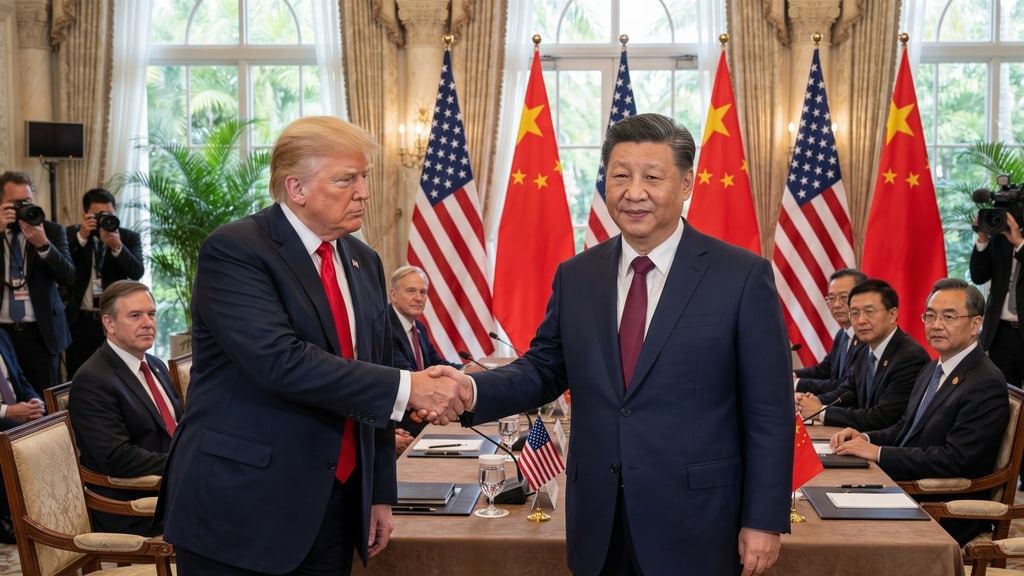
The Trump administration has announced fresh tariff proposals targeting Chinese imports, imposing an additional 20 percent duty that would combine with pre-existing 25 percent levies from the president's first term to bring total duties on affected Chinese goods to as much as 45 percent.
On November 25, 2026, the Office of the United States Trade Representative released its determinations under Section 301 of the Trade Act of 1974, finding that manufacturing policies and structural excess capacity in 14 major trading economies unreasonably harm United States commerce. Vietnam faces proposed tariffs of up to 35 percent, India 25 percent, and Indonesia, Malaysia, Thailand, Cambodia, and Bangladesh each 18 percent. The European Union, Japan, South Korea, Switzerland, and Taiwan would face 15 percent duties.
The tariffs remain inactive pending a mandatory public comment period, with possible rollout beginning in January 2027. This timeline creates urgency as Washington and Beijing prepare for a fourth leaders' summit in Miami next month and face a January 10, 2027 deadline for their current two-month trade truce.
The Section 301 framework emerged after the United States Supreme Court invalidated earlier tariffs the administration had imposed using emergency economic authority. Trade officials then restructured their approach through statutory unfair-trade investigations.
Chinese officials responded sharply on November 26, 2026, though they did not immediately announce retaliatory tariffs. Ministry of Commerce spokesperson He Yadong called the Section 301 determination unilateralism that breaches World Trade Organization rules, stating that China "reserves the right to take necessary measures to firmly defend its legitimate rights and interests". Ministry of Foreign Affairs spokesperson Guo Jiakun dismissed Washington's claims of industrial overcapacity as a "false premise", saying China rejects its use "as a pretext for political maneuvering."

Comments
No comments yet. Be the first.