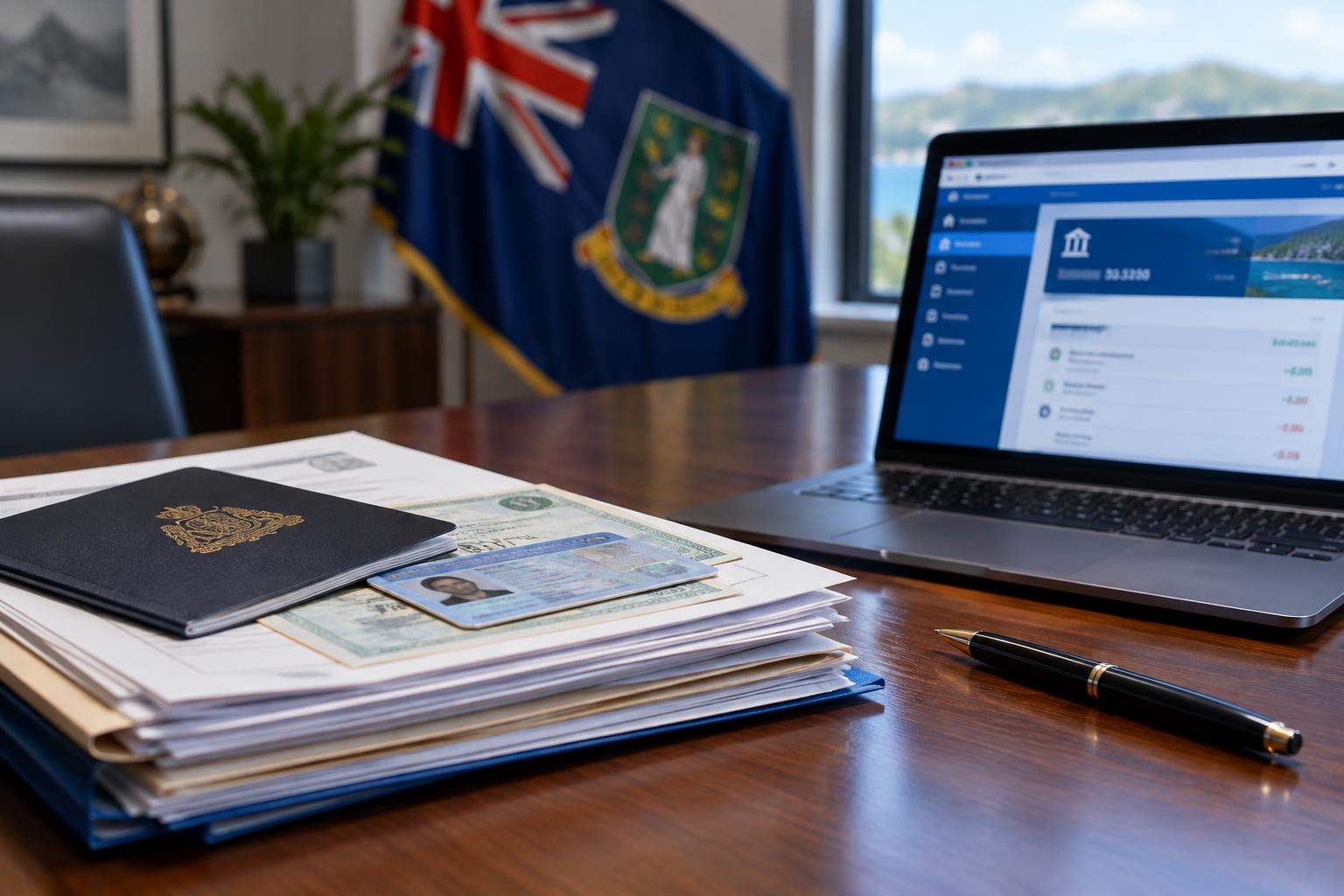
A clash over banking compliance has surfaced in the British Virgin Islands, with critics arguing that financial institutions are demanding too many personal documents from customers in the name of Know Your Customer procedures.
Talking Points host Violet Gaul raised concerns during an interview with Police Commissioner Richard Ullger, calling some verification requirements excessive and "foolishness." She noted that residents face repeated requests for passports, driver's licences, utility bills and similar paperwork, and questioned whether submitting an electricity bill multiple times actually helps banks detect money laundering or drug trafficking.
Gaul also pointed to a practical barrier: when utility accounts are held under a spouse's name, customers struggle to meet rules requiring bills in their own name. She contrasted the BVI's approach with her experience opening accounts in the United States, where she said the process was simpler.
Ullger defended the stringent controls as necessary to address the territory's grey-listing status and to comply with international anti-money laundering standards. "It is so, so important for the islands to come off the grey list," he said, cautioning that the listing threatens the banking and business sectors.
Gaul countered that the BVI may already enforce stricter oversight than nations that criticise it. "I think we are doing better at policing these things than the UK, for instance, and even the US," she said.
While acknowledging frustration with the process, Ullger maintained that banks must continue gathering required documentation to combat financial crime. He explained that investigating such offences demands substantial time and resources. The Royal Virgin Islands Police Force maintains between eight and 10 officers focused on financial investigations, he noted, who spend considerable effort reviewing records and assembling evidence for prosecution. Ullger characterised this work as "unseen policing" and stressed that banks, insurers and other businesses share responsibility for blocking illicit money flows through the financial system.


Comments
No comments yet. Be the first.