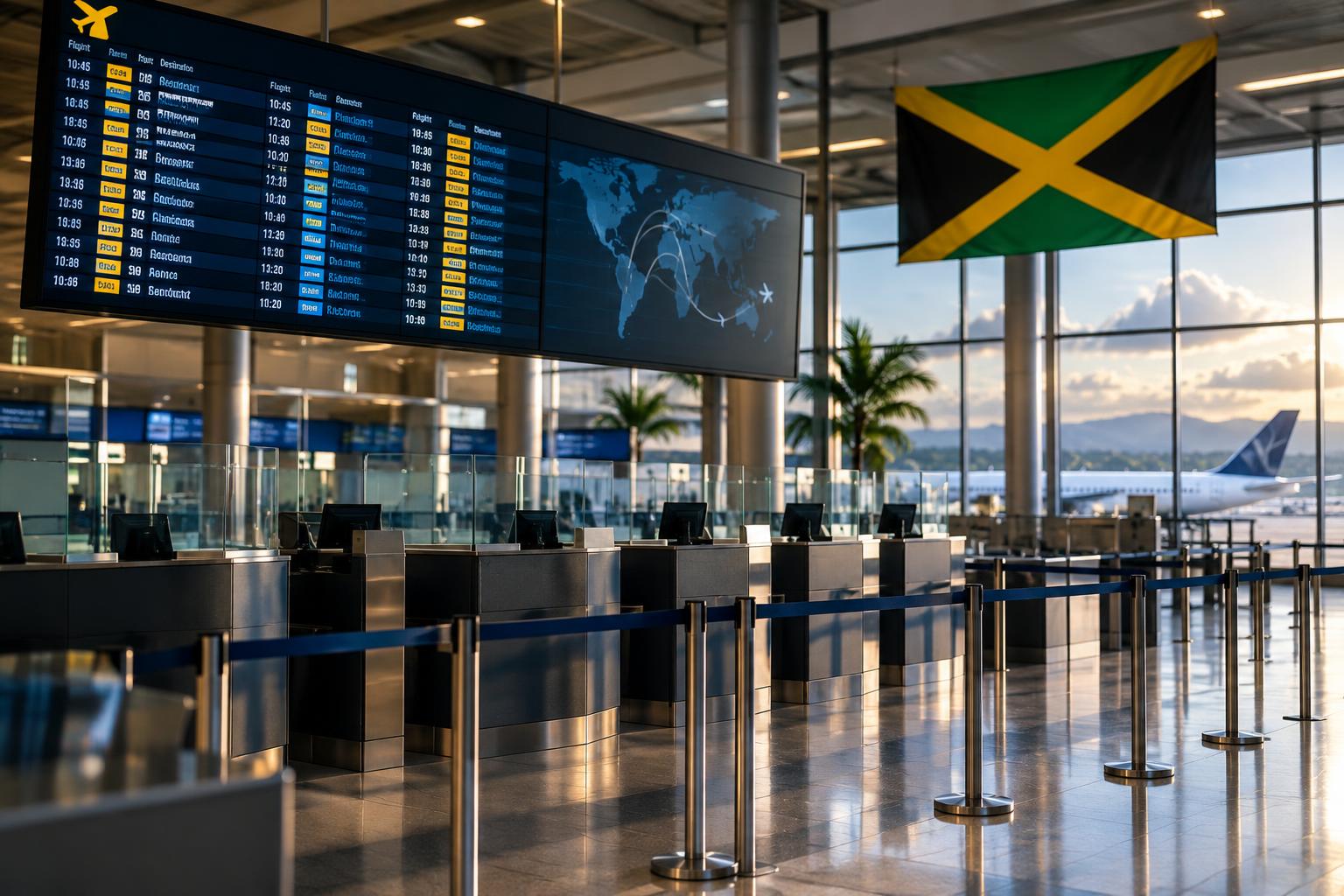
Jamaica has started operating as a processing hub for migrants deported from the United States, with an inaugural flight touching down at Norman Manley International Airport in Kingston on Tuesday afternoon.
The arrival carried 22 adults, seven of them women, whom local sources identified as predominantly from South America. Upon landing, Jamaican authorities moved the group by bus under police guard to a location kept secret from the media.
The arrangement stems from a bilateral memorandum of understanding signed in June. Under its terms, non-Jamaican nationals will arrive in Jamaica for processing before moving onward to their countries of origin or elsewhere. Jamaica has committed to accepting no more than 25 people every two weeks.
A joint statement from the Ministry of National Security and Peace and the Ministry of Foreign Affairs and Foreign Trade outlined the framework: "This is a transit arrangement intended to facilitate the return of Third Country Nationals to their country of origin or other receiving countries, with the support of the IOM (International Organization for Migration)." The government pledged not to fund the scheme and said it would bar anyone with a criminal record.
The International Organization for Migration will handle accommodation and logistics through its Assisted Voluntary Return program.
The deal has ignited fierce political pushback. Fitz Jackson, the opposition's national security spokesperson, contended that lawmakers were excluded from negotiations and branded the secrecy "a blatant contempt to the people of Jamaica." Opposition Leader Mark Golding has demanded clarity on what Jamaica gains.
Foreign Affairs Minister Kamina Johnson Smith countered on Tuesday that negotiators "made every effort" to safeguard Jamaica's interests. She said nothing in the pact is "prejudicial", though she acknowledged the United States has declined to release it publicly.
Bishop Alvin Bailey, heading a local evangelical coalition, has questioned why America could not send deportees straight home instead of routing them through Jamaica.
Similar arrangements have multiplied under the Trump administration, with migrants also going to Liberia, Eswatini, Paraguay and other nations. Jamaica's Supreme Court is expected to examine the legality of such agreements.


Comments
No comments yet. Be the first.