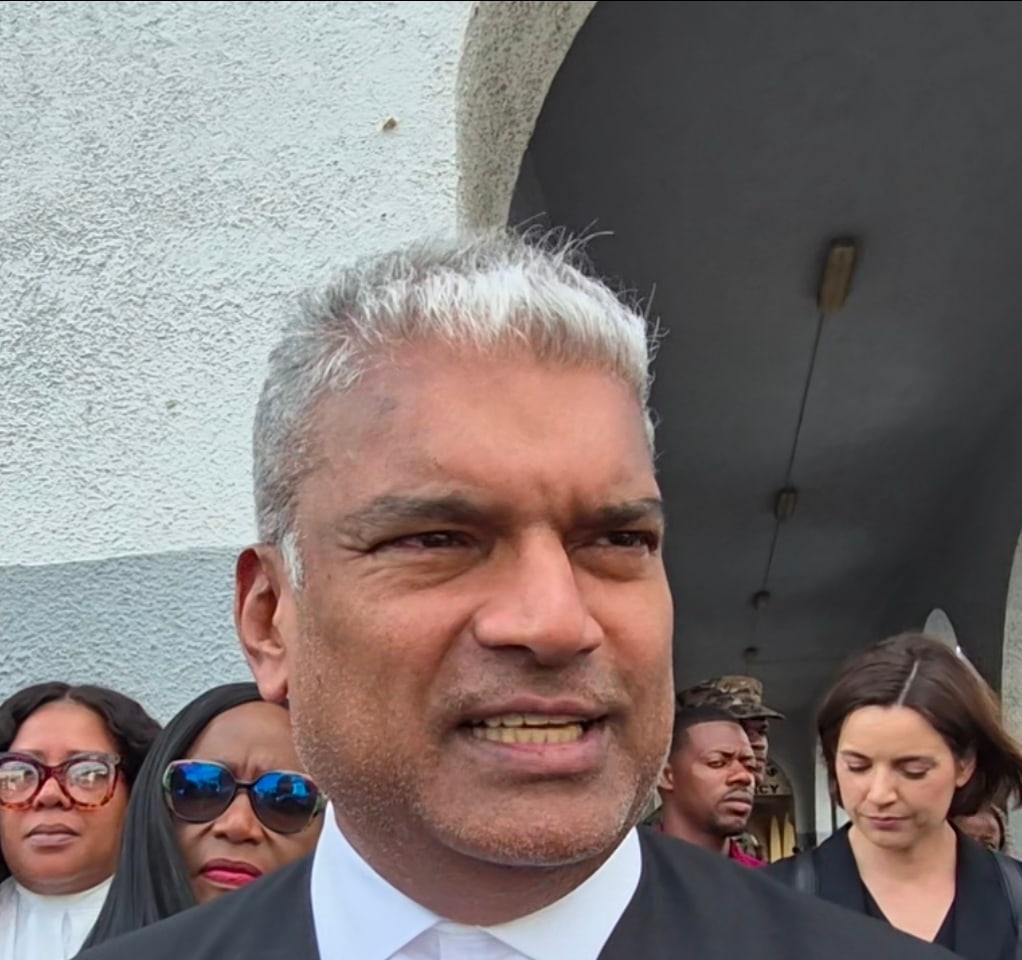
Lead defence counsel Anand Ramlogan has cautioned the High Court that if it finds Prime Minister Godwin Friday ineligible to serve in Parliament, the ruling would effectively trigger a constitutional offence that could expose Friday to prosecution.
Ramlogan made the submission during closing arguments in consolidated election petitions filed by unsuccessful Unity Labour Party candidates Carlos Williams and Luke Browne. Williams lost to Friday in the Northern Grenadines; Browne lost to Foreign Affairs Minister Dwight Fitzgerald Bramble in East Kingstown, both in the November 2025 general election.
The petitioners are asking the court to invalidate both election results, arguing that Friday and Bramble breached Section 26(1)(a) of the Constitution by acquiring Canadian citizenship, which they contend constitutes an acknowledgement of allegiance to a foreign state.
Ramlogan argued that Section 42 of the Constitution makes it an offence for anyone to sit or vote in Parliament knowing they are unqualified. He warned that a ruling against the Prime Minister would require the court to consider whether Friday knowingly sat in Parliament since 2001 while disqualified, potentially exposing him to prosecution.
The defence has maintained that Section 25 of the Constitution permits Commonwealth citizens to sit in Parliament, and that Canadian citizenship does not constitute allegiance to a foreign power. Ramlogan contended that the Constitution distinguishes between Commonwealth citizens and non-Commonwealth nationals, and that someone who acquires citizenship in another Commonwealth country remains within the protected category of eligible candidates.
Ramlogan urged the court to interpret the Constitution "in a coherent, composite manner" rather than in a "compartmentalised, disconnected manner." He argued that the law must be clear enough that an ordinary person understands the consequences of their actions, and that any ambiguity must be resolved in favour of the individual.
He also argued that narrowing the pool of eligible candidates to exclude Commonwealth citizens who have acquired citizenship elsewhere is a matter for Parliament, not the courts, and that such distinctions contradict the Constitution's broad inclusion of all Commonwealth citizens.
Closing arguments concluded before Justice Gertel Thom on November 12. A ruling is expected early next year.


Comments
No comments yet. Be the first.