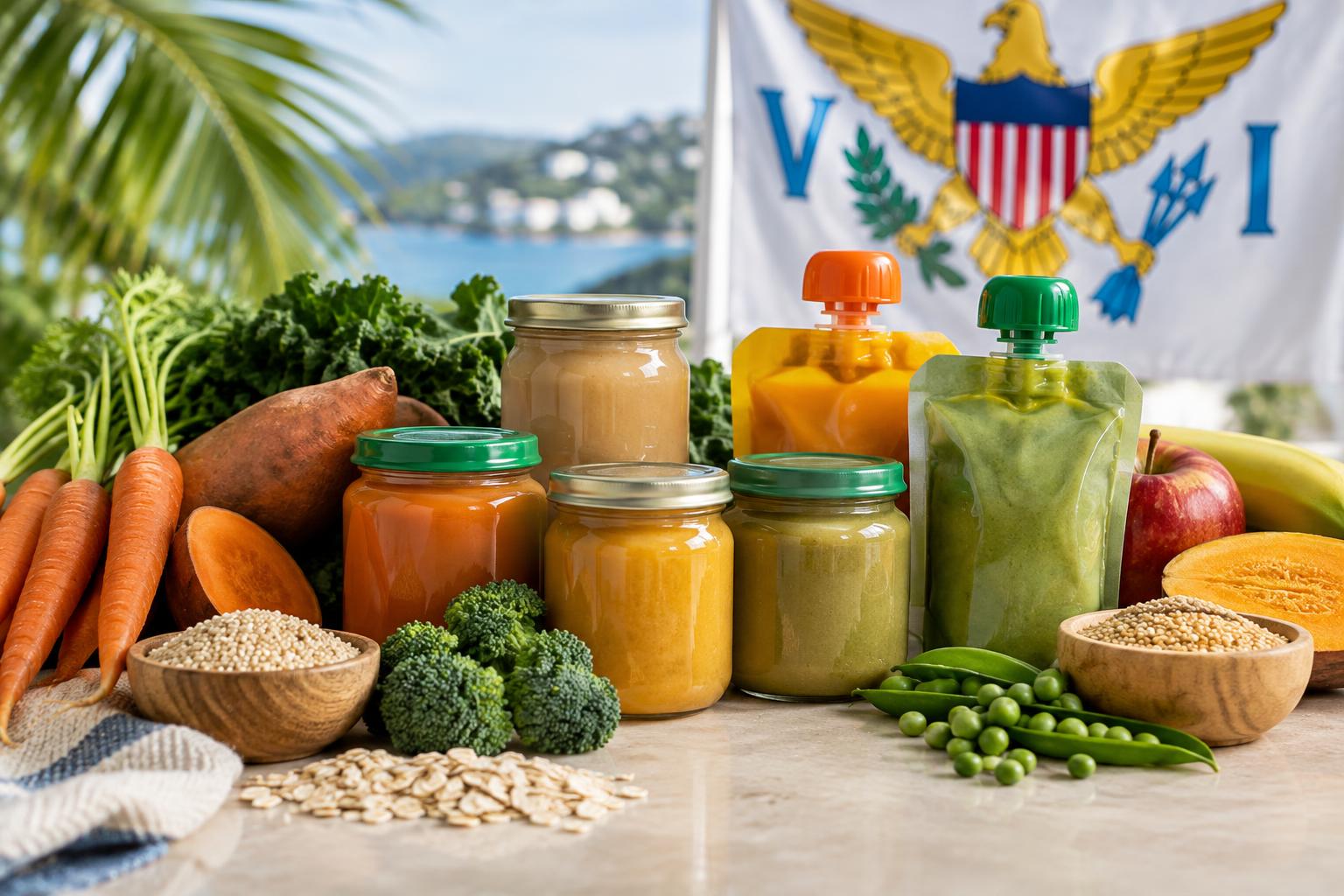
The U.S. Food and Drug Administration has put forward safety thresholds for cadmium in packaged baby foods available to Virgin Islands consumers, as part of a wider effort to lower children's contact with dangerous metals.
On October 22, the agency unveiled the proposal, with official details appearing in the Federal Register the next day. The guidance does not yet carry legal force, and no recalls or unsafe products have been flagged. It forms part of the FDA's Closer to Zero initiative, targeting arsenic, cadmium, lead and mercury in children's food.
The recommended concentrations differ depending on what the food contains. Processed fruits, vegetables and mixed baby foods would face a 10 parts per billion threshold; single-ingredient carrots and meats, 25 parts per billion; dry infant cereals, 45 parts per billion; and yogurts, puddings and custards for babies, 20 parts per billion.
Why Cadmium Poses a Risk
Cadmium exists naturally in the earth but enters soil and water via pollution, industrial discharge and farming methods. Plants absorb it from contaminated ground, potentially carrying it into processed foods.
Long-term dietary intake of cadmium damages kidneys and bones. The body sheds it slowly, meaning repeated exposure builds up over time. Infants and toddlers face heightened risk due to their small size and still-developing systems.
What Testing Reveals
Federal researchers studied cadmium levels in processed baby foods from 2009 through 2024. Their findings showed that 93 percent of processed fruit, vegetable and mixed food samples already met the proposed 10 parts per billion level, while 98 percent of dry cereal samples hit the proposed 45 parts per billion mark.
For single-ingredient carrots, 84 percent of samples tested already complied with the proposed 25 parts per billion standard. The FDA concluded that a tighter limit might shrink carrot baby food availability without delivering meaningful extra protection.
If adopted, the thresholds could cut cadmium exposure from processed fruits, vegetables and mixed foods by roughly 28 percent in children at the 90th percentile of consumption. Carrot products might see a 32 percent drop, while dry cereals could fall by 5 percent. For yogurts, puddings, custards and single-ingredient meats, cadmium levels were already low enough that the proposed limits would produce no measurable change.
Local Impact and Scope
The guidance applies to jarred, pouched, tubbed and boxed baby and toddler foods flowing through national distribution channels and stocked on Virgin Islands shelves. It does not extend to infant formula, drinks, fresh produce, home-prepared meals or certain packaged snack foods.
No evidence has emerged that baby foods currently available in the Virgin Islands contain unsafe cadmium levels. The federal announcement included no territory-specific test data or violations.
The FDA encourages parents and guardians to maintain balanced, nutrient-rich diets for children, incorporating fruits, vegetables, grains, dairy and proteins. The action levels aim to steer manufacturers toward reducing contamination rather than prompt families to avoid specific products.
The public comment period on the proposal runs until December 22, 2026.




Comments
No comments yet. Be the first.