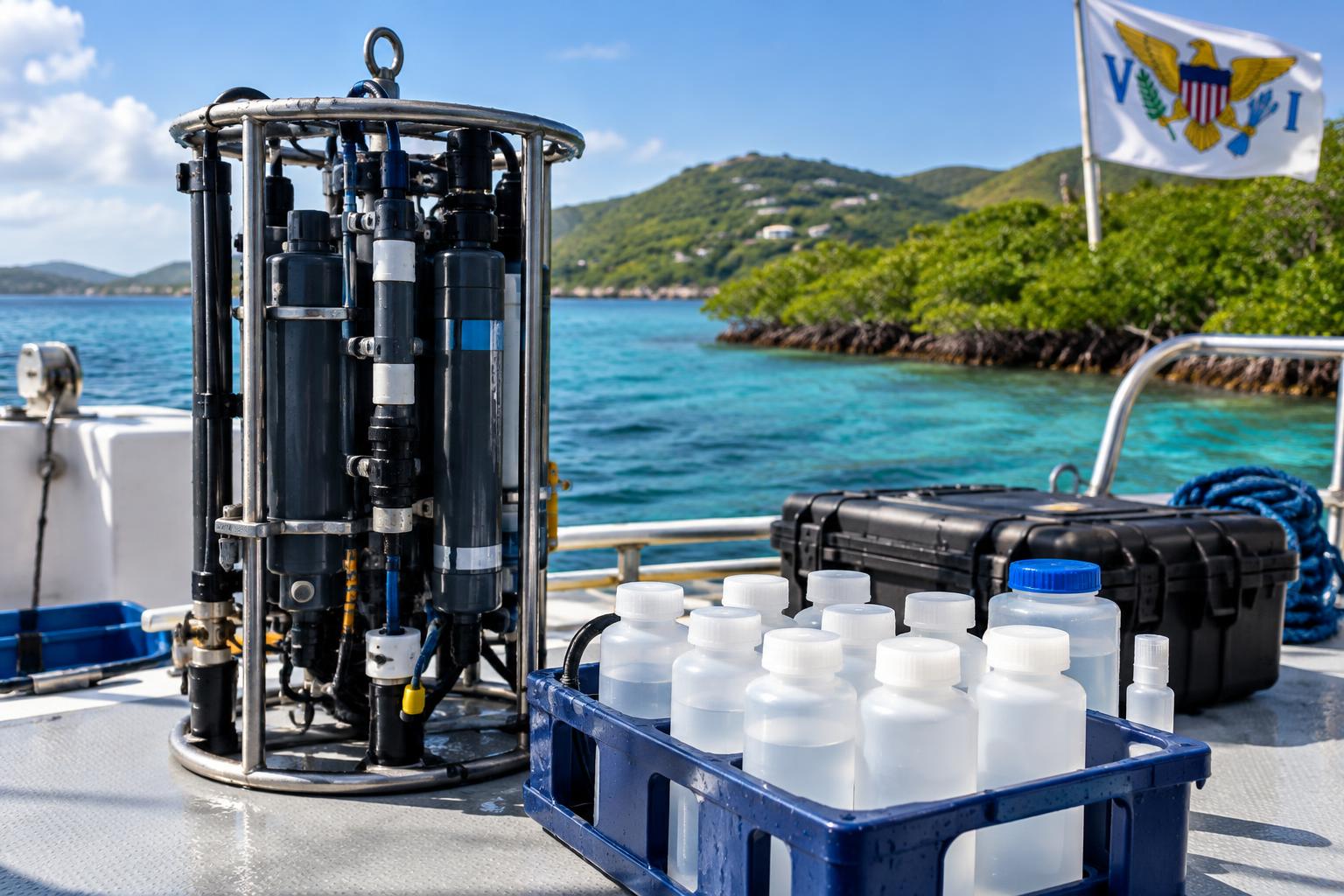
A $349,484 federal contract awarded to Research Triangle Institute will keep water-quality monitoring work moving across the U.S. Virgin Islands, the Environmental Protection Agency announced in early October following the September 24 award date.
The funding extends the Basic Water Quality Monitoring Program and builds on research the same firm has already completed. EPA stressed that the work cannot pause because portions operate under court-ordered schedules. Switching to a different contractor now, the agency cautioned, risked missing federal deadlines and slowing progress on studies already underway.
The research centres on Total Maximum Daily Loads, known as TMDLs. These scientific assessments establish how much pollution a waterway can tolerate while still meeting federal and territorial standards. The Clean Water Act mandates such studies for any waters deemed polluted or degraded.
The U.S. Virgin Islands confronts substantial water-quality problems. EPA's current impaired-waters inventory lists 250 separate waterbody-and-pollutant pairs needing action, with 99 added in the most recent cycle. Affected waters surround St. Croix, St. Thomas and St. John, with issues ranging from nitrogen and bacteria to turbidity, oxygen depletion and phosphorus.
Two zones rank as especially urgent: parts of the St. Thomas East End Reserves and the St. Croix East End Marine Park. EPA's 2022 assessment flagged 21 priority areas within these marine reserves, encompassing ecologically vital mangroves, coral reefs, seagrass beds, fishing grounds and intensively used shorelines.
Research Triangle Institute won the contract without competitive bidding because it already held a prior competitively awarded agreement for related work. Retaining the existing contractor, EPA explained, would eliminate delays from procurement and changeover procedures. The firm possesses the technical expertise needed for complex analysis, regulatory compliance, report preparation and eventual public hearings before pollution limits take effect.
Monitoring has historically covered dozens of sampling points throughout the territory. Recent quarterly surveys included 36 sites around St. Croix and 58 around St. Thomas and St. John. These data determine whether waters meet standards for swimming, fishing, marine ecosystems and other designated purposes.
The contract extends through September 2027.
Comments
No comments yet. Be the first.