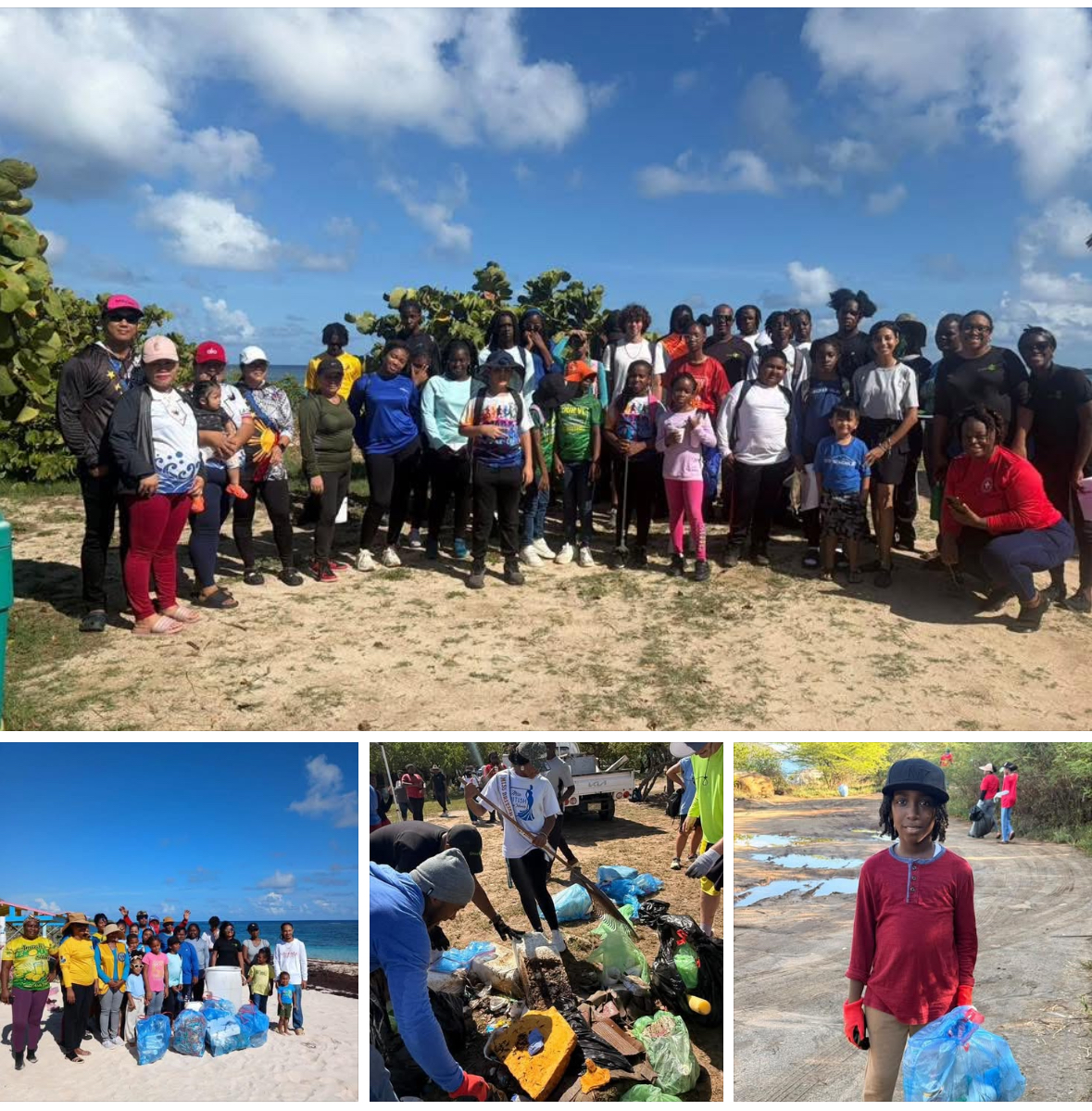
Volunteers working across Anegada, Virgin Gorda, Jost Van Dyke and Trellis Bay removed more than 1,754 pounds of debris from British Virgin Islands coastlines during a four-hour cleanup on September 19, organised by environmental group Green VI.
The effort brought together 268 volunteers from communities, schools, businesses, churches and government to participate in the International Coastal Cleanup. The scale of material collected underscores how much plastic waste continues to enter the territory's environment.
Of the total debris removed, 819.88 pounds were recyclable materials, nearly equivalent to what the entire territory typically collects during a full day of recycling operations. Volunteers also recovered 1,387 single-use plastic water bottles, which Green VI estimates represent approximately $288 worth of bottled water, or roughly what one resident might spend on bottled water over a year.
Green VI, which runs the cleanup as part of PROMAR (Prevention of Marine Litter in the Caribbean Sea), a regional programme tackling marine litter through community action and education, emphasised the connection between environmental and public health. The organisation noted that plastic breaks down into microplastics that have been detected in water, food and human bodies, and that discarded containers can create breeding sites for mosquitoes.
Since 2018, the BVI's We Recycle programme has collected, baled and exported nearly 14 million single-use plastic water bottles. Green VI said recycling remains important for bottles already in circulation, but the organisation is encouraging residents to move upstream by refusing and reducing single-use plastics altogether, particularly by choosing reusable water bottles.
The group is also promoting a circular-economy approach to waste, encouraging the territory to view recyclable materials as resources that can create value while reducing what reaches coastlines and landfills.
Comments
No comments yet. Be the first.