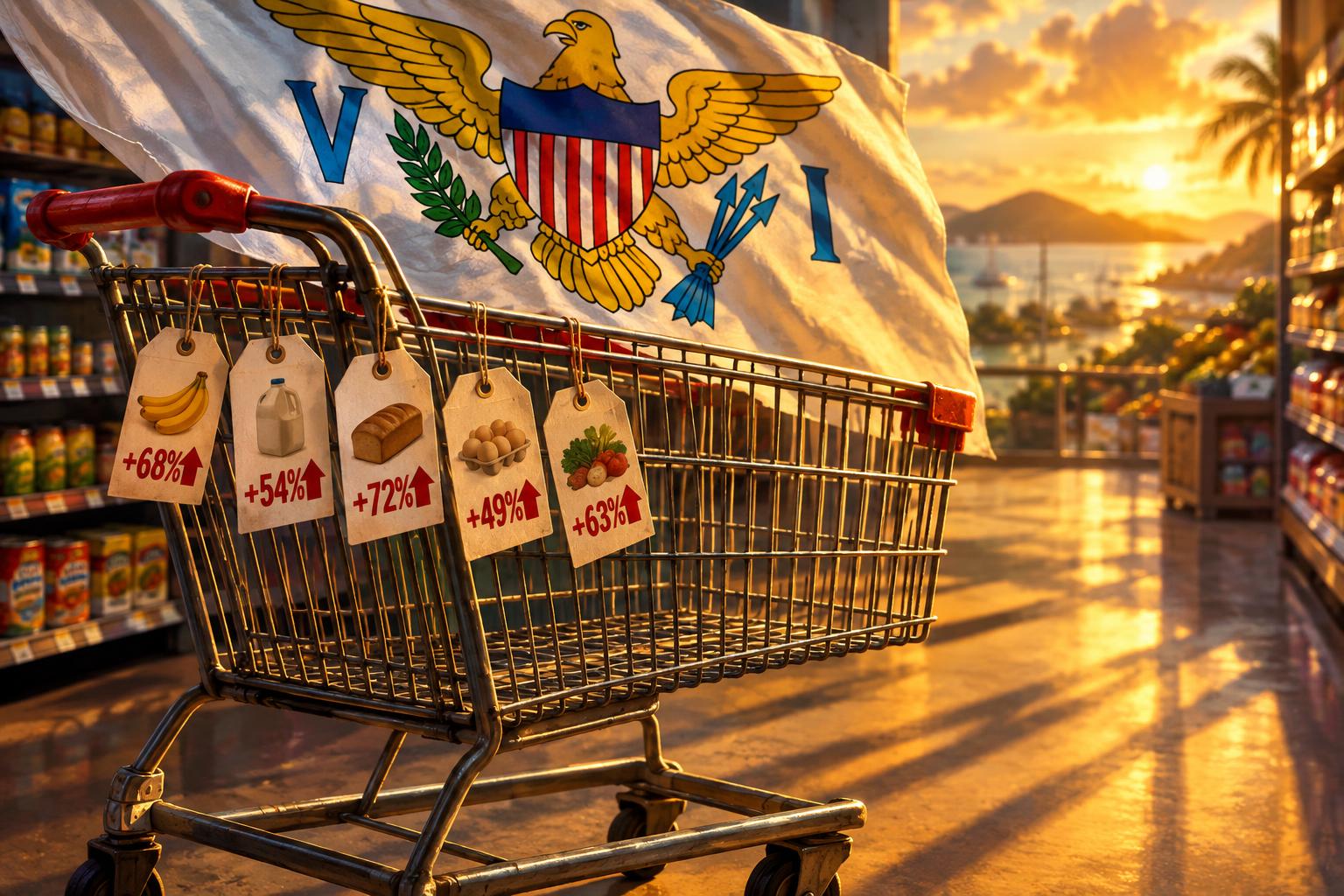
Governor Albert Bryan Jr. has cautioned that the territory's massive post-hurricane reconstruction effort will create economic opportunity but also drive up living costs, particularly for lower-income residents.
At a Government House briefing on Monday, Mr. Bryan described inflation in the Virgin Islands as hovering between eight and nine percent. He told federal emergency management officials in Washington that FEMA representatives were "kind of amazed at how much inflation is being created by the recovery."
The scale of construction work ahead is substantial. Nineteen major projects are slated to begin in 2026, followed by 42 in 2027 and 46 in 2028. The Rebuild USVI programme alone supports 12 contracts covering 39 projects with roughly $13.7 billion in committed funding. As of August 31, total obligated recovery funding reached $24.55 billion, with $4.89 billion already spent.
Tourism is compounding the inflationary pressure. The territory welcomed approximately 2.24 million visitors through August 2026, comprising 744,449 air arrivals and nearly 1.494 million cruise passengers. Mr. Bryan noted that "our tourism product is raging as well at the same time," intensifying demand in a small island economy already absorbing billions in recovery spending.
Food and fuel costs are rising sharply. Grocery prices climbed 8.8 percent in 2024, while education and communication expenses jumped 16.8 percent. A Department of Licensing and Consumer Affairs survey found regular gasoline on St. Croix exceeding $4.30 per gallon in August.
Electricity poses an immediate crisis. The administration has deployed approximately $100 million in federal recovery funds since 2022 to prevent rate increases. "We're out of federal money to kind of subsidize that bill," Mr. Bryan said. The Public Services Commission has maintained WAPA's electric Levelized Energy Adjustment Clause at roughly 22.22 cents per kilowatt-hour since March 2022.
Mr. Bryan acknowledged the contradiction: the same recovery programme expected to generate jobs will make essentials harder to afford. "The people who are going to feel the brunt of this the most are the poor people…they have the least resources," he said.
He urged residents to act now, recommending education and skills training. "You gotta buy now. You gotta invest now. You gotta upskill," he said, describing the outlook as a "tsunami of inflation." He highlighted the University of the Virgin Islands' Free Tuition Programme and the Department of Labor's workforce-development offerings as pathways to higher earning potential.

Comments
No comments yet. Be the first.